
What the Prague Communism and Nuclear Bunker Tour Actually Covers
This is not just a “bunker visit.” It’s a curated historical journey divided into two main parts:
- A guided city walk through Prague’s New Town and key communist-era sites
- An underground nuclear bunker visit built as a Cold War civil defense shelter
The walking section provides context—how communism took power in 1948, what daily propaganda looked like, where secret police operated, and how citizens experienced repression and resistance. The bunker visit then shows how seriously the threat of nuclear war was taken in Central Europe.
Check availability for the Communism and Nuclear Bunker Tour
Step-by-Step: What to Expect on the Tour
1. Meeting Point and Introduction
The tour typically begins near central Prague (often around Wenceslas Square). Your guide introduces:
- The Nazi occupation (1939–1945)
- The 1948 Communist coup
- The establishment of the Socialist state
This grounding is important because the communist regime did not emerge in isolation—it built on postwar instability and Soviet influence.
2. Political Landmarks and Everyday Life
You walk through locations where historic demonstrations occurred, especially those tied to:
- The Prague Spring (1968)
- The Warsaw Pact invasion
- The Velvet Revolution (1989)
Guides often share personal family stories about food shortages, censorship, surveillance, and state-controlled media. These anecdotes add human texture beyond textbook history.
Based on traveler feedback, this segment tends to be the most eye-opening. Visitors often mention how clearly the guide explains complex political shifts in simple terms.
3. Cold War Context
You’ll also learn about:
- The role of the Soviet Union in Czechoslovakia
- StB (secret police) surveillance systems
- Political prisons and interrogation methods
- Propaganda techniques and public messaging
This contextual understanding prepares you for the bunker visit. Without it, the bunker would feel like just concrete corridors—but with it, the tension becomes tangible.
4. The Nuclear Bunker Experience
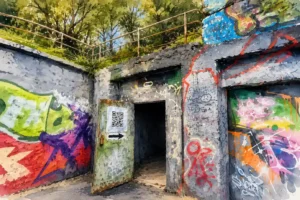
The second half takes you underground into an authentic Cold War shelter. Originally designed for civil defense, it includes:
- Air filtration systems
- Communication rooms
- Sleeping quarters
- Emergency medical equipment displays
| Feature | What You See | Why It Matters |
|---|---|---|
| Air filtration units | Original Cold War systems | Preparedness for nuclear fallout |
| Bunk beds | Basic steel-frame sleeping spaces | Designed for short-term survival |
| Control rooms | Communication infrastructure | Command structure during crisis |
The bunker portion usually lasts 30–45 minutes and feels very different from typical sightseeing tours in Prague.
View tour times and ticket options here
Why Booking in Advance Makes Sense
This tour is popular for three reasons:
- Small group format
- English-language expert guides
- Exclusive bunker access
Spots can fill up during spring, summer, and autumn weekends. Advance booking secures your preferred time and avoids last-minute searching.
Flexible cancellation policies offered through major platforms add extra reassurance if your itinerary changes.
How This Tour Compares to Separate History Experiences
Some travelers consider booking separate walking tours or museum visits instead. Here’s how they differ:
| Option | Pros | Limitations |
|---|---|---|
| Communism + Bunker Tour | Integrated narrative, expert guide, real bunker access | Fixed schedule |
| Communism Museum only | Self-paced | No underground bunker experience |
| General city walking tour | Broader Prague history | Limited Cold War depth |
If Cold War history is your focus, the combined format saves time and delivers stronger context.
Who Will Get the Most Value From This Tour?
- History enthusiasts
- Travelers interested in 20th-century European politics
- Students studying Cold War history
- Visitors who want something deeper than castles and beer tastings
It’s less suitable for very young children due to the heavy historical themes and bunker environment.
Real Visitor Insights
Review Insight #1: Many travelers highlight the guide’s storytelling ability, especially personal anecdotes about growing up during communism.
Review Insight #2: Visitors often say the bunker feels “unexpectedly intense” compared to above-ground sightseeing.
Review Insight #3: Several guests mention that this tour helped them better understand the Velvet Revolution monuments they later encountered independently.
Reserve your spot for the nuclear bunker experience
Practical Tips Before You Go
- Wear comfortable shoes (walking involved).
- Bring a light jacket—the bunker is cooler underground.
- Arrive 10–15 minutes early.
- Photography is usually allowed, but confirm on-site.
Frequently Asked Questions
1. How long is the tour?
Most tours last approximately 2.5 to 3 hours, including walking time and bunker exploration.
2. Is the bunker an original Cold War site?
Yes. It is an authentic civil defense shelter constructed during the communist period, not a replica.
3. Is it safe to enter the bunker?
Yes. The space has been secured and adapted for visitors. However, it involves stairs and underground corridors.
4. Is prior historical knowledge necessary?
No. Guides explain the timeline clearly, making it accessible even if you’re new to Czech history.
5. Can children join?
Teenagers generally find it educational, but younger children may find it less engaging.
6. Is the tour wheelchair accessible?
The walking portion may be manageable, but bunker access typically involves stairs and may not be fully accessible.
7. How does this tour relate to the Prague Spring?
The guide explains the 1968 reform movement and subsequent Soviet invasion, connecting events to specific locations visited.
8. Are tickets refundable?
Most booking platforms offer free cancellation within a specified period. Always confirm at checkout.
Additional Resources for Deeper Research
- Official Prague tourism portal
- Museum of Communism in Prague
- Institute for the Study of Totalitarian Regimes
Related Prague Cold War Guides
If you want to explore related experiences in more detail:
- Prague Communism History Tour Guide
- Prague Nuclear Bunker Tour Explained
- Cold War History Tour in Prague
For a full overview, visit our main guide here: