
What You’ll See on a Cold War History Tour in Prague
Prague’s Communist-era sites are easy to miss if you’re exploring on your own. Many bunkers are hidden beneath ordinary apartment blocks or office buildings. A structured Cold War tour connects the dots between visible landmarks and the concealed infrastructure designed for crisis scenarios.
Most tours combine:
- A guided walk through key Communist-era locations in central Prague
- Explanation of the 1948 Communist coup and the 1968 Soviet invasion
- Entry into a genuine nuclear fallout shelter
- First-hand accounts of rationing, surveillance, and censorship
The highlight for most visitors is descending into a real Cold War bunker that once served as a civil defense shelter. These facilities were built to protect civilians in case of nuclear attack, equipped with filtration systems, medical rooms, communication devices, and stockpiled supplies.
Check Cold War bunker tour availability
Inside a Real Nuclear Bunker
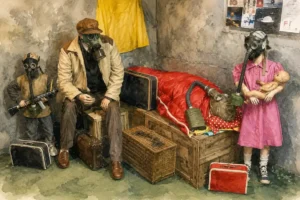
Walking into a preserved bunker changes your understanding of Cold War paranoia. The heavy blast doors close behind you. Air filtration systems line the corridors. Narrow bunks, chemical toilets, gas masks, and decontamination showers remain in place.
Guides usually explain:
- How long civilians could survive underground
- How air purification systems worked
- What kind of medical treatment was possible
- How authorities communicated during emergencies
Unlike museums with reconstructed props, many Prague shelters contain original equipment from the 1950s–1980s. The atmosphere is stark and functional.
What Makes Prague Different?
While many European cities have Cold War relics, Prague’s experience was shaped by:
- Direct Soviet military presence after 1968
- Extensive state surveillance networks
- A strong dissident movement, including Václav Havel
- The peaceful 1989 Velvet Revolution
This layered history means tours often feel personal rather than abstract. Your guide may reference specific apartment blocks used by secret police or former propaganda sites that locals still remember.
How the Tour Typically Works
| Stage | What Happens |
|---|---|
| Meeting Point | Central Prague location, usually near Old Town or Wenceslas Square |
| Historical Walk | Context about Communist rule, daily life, resistance movements |
| Bunker Entry | Guided exploration of underground nuclear shelter |
| Explanations | Demonstration of masks, filtration systems, emergency plans |
| Q&A Session | Time to ask about family stories, everyday restrictions, politics |
Most tours last around 2–3 hours. Expect stairs when entering the bunker. Temperatures underground are cooler than street level, even in summer.
Is It Worth Booking in Advance?
Yes—especially in peak travel months (April to October). Bunker spaces are limited because of safety regulations and narrow interiors.
Booking ahead gives you:
- Guaranteed access to the bunker
- Choice of language
- Preferred time slot
- Clear cancellation policy
View available time slots for the Prague bunker tour
Real Visitor Impressions
Anna, Germany: “I expected a standard city walk. The bunker changed everything. Seeing the original equipment made the fear of that period feel real.”
David, USA: “Our guide had family stories from the 1970s. It stopped being abstract history and became very human.”
Lucia, Spain: “Cold and a bit claustrophobic underground, but that’s the point. It gave context to everything I saw in the city above.”
Who Should Take This Tour?
This tour works well for:
- History-focused travelers
- Visitors curious about life behind the Iron Curtain
- Students studying European history
- Travelers who’ve already seen Prague Castle and want something deeper
It’s generally not ideal for:
- People with severe mobility limitations (stairs)
- Travelers uncomfortable in enclosed underground spaces
Communism in Prague: Context You’ll Learn
Understanding the bunker requires context. Tours typically cover:
- The 1948 Communist coup d’état
- Collectivization and economic planning
- Censorship and media control
- The Prague Spring of 1968
- The Soviet invasion and “Normalization” period
- The Velvet Revolution of 1989
Many guides reference archival sources and materials from the Institute for the Study of Totalitarian Regimes, helping ground the narrative in documented history rather than dramatization.
What to Know Before You Go
1. Clothing
Bring a light jacket. Underground temperatures remain cool year-round.
2. Photography
Usually allowed, but flash may be restricted due to sensitive equipment.
3. Language Options
English tours are widely available. Booking ahead ensures your preferred language.
4. Accessibility
Expect stairs and narrow corridors. Not wheelchair accessible.
Why a Guided Tour Beats Self-Exploration
Some Cold War landmarks in Prague are visible independently. However, without explanation, they appear as ordinary buildings.
A guided experience gives you:
- Access to restricted underground areas
- Historical interpretation backed by research
- Personal stories and anecdotes
- Structured understanding of events
Secure your spot on the Prague Communism and bunker tour
Comparing Cold War Tour Options in Prague
If you’re deciding between formats, here’s a quick breakdown:
| Tour Type | Best For |
|---|---|
| Walking Only | Surface-level historical overview |
| Bunker Only | Short visit focused on civil defense systems |
| Combined Communism + Bunker Tour | Full context plus immersive underground experience |
For most first-time visitors, the combined option offers the strongest understanding of Prague’s Cold War legacy.
Frequently Asked Questions
1. How long does the Cold War bunker tour in Prague last?
Typically 2–3 hours, including the walking portion and underground visit. Confirm exact timing when booking.
2. Is the bunker authentic or reconstructed?
Most tours visit a genuine Cold War-era civil defense shelter with original equipment from the Communist period.
3. Is it suitable for children?
Teenagers with interest in history usually find it engaging. Younger children may find the historical detail less compelling.
4. Are there bathroom facilities inside the bunker?
No modern visitor restrooms underground. Use facilities before the tour begins.
5. Is it claustrophobic?
The space is enclosed but generally manageable for most visitors. If you have severe claustrophobia, consider this carefully.
6. Can I visit a bunker alone without a tour?
Public access to preserved shelters is usually only available through organized tours.
7. What is the best time of year to do this tour?
Year-round. Summer is busiest. Winter offers smaller group sizes and easier booking.
8. Does the tour include Communist museums?
It depends on the provider. Some focus strictly on the bunker and historical walking component.
Additional Resources and Deeper Research
For further reading and verified historical documentation, explore:
Explore More Cold War Experiences in Prague
If you want deeper insight before booking, these guides break down details and differences:
- Prague Communism History Tour Guide
- What to Expect on a Prague Nuclear Bunker Tour
- Complete Communism and Nuclear Bunker Experience Overview
For full tour details and booking information, visit the main resource page here: