
What the Prague Communism History Tour Actually Covers
The Prague Communism History Tour walks you through the key political and cultural layers of 20th-century Czech history. It focuses on three major periods:
- The Nazi occupation (1939–1945) as context for post-war Soviet influence
- The Communist takeover in 1948 and the totalitarian regime that followed
- The Cold War and the 1989 Velvet Revolution
Instead of presenting dry historical summaries, guides explain how communism reshaped housing, employment, travel, media, religion, and education. You understand how ideology turned into everyday control.
Why it matters: Prague was one of the most strategically important cities in the Eastern Bloc. Decisions made here affected millions across Central Europe.
Stop-by-Stop: What You Will See
1. Wenceslas Square – Protests and Turning Points
Most tours begin in Wenceslas Square, Prague’s symbolic political heart. This boulevard witnessed Nazi rallies, Soviet-backed communist celebrations, the 1968 Prague Spring protests, and the mass demonstrations of 1989.
Your guide explains:
- How the Communist Party consolidated power in 1948
- The Warsaw Pact invasion in 1968
- How student protests sparked the Velvet Revolution
Standing here makes recent history feel surprisingly close.
2. Národní Street – The Spark of 1989
Národní Třída is where police brutally suppressed a peaceful student march on November 17, 1989. What seemed like another act of repression triggered nationwide strikes and massive demonstrations.
Guides often describe personal stories of fear, tension, and uncertainty during those days. Many visitors say this is the moment the tour becomes emotionally powerful.
3. Former Secret Police Areas
You’ll learn about the StB (State Security), the secret police organization responsible for surveillance, interrogations, and intimidation. The guide explains:
- How neighbors were pressured into informing
- How mail and phone calls were monitored
- What imprisonment meant for dissidents
These stories are drawn from documented archives and research from institutions like the Institute for the Study of Totalitarian Regimes.
Check current availability for the Communism & Nuclear Bunker Tour
4. Everyday Life Under Communism
One of the most eye-opening parts of the tour is learning about ordinary life.
You’ll hear about:
- Queueing for basic goods
- State-controlled salaries
- Travel restrictions outside the Eastern Bloc
- Propaganda in schools and the media
Many guides include short anecdotes collected from families who lived through the regime. These insights go beyond what you’ll see in a typical museum.
5. The Nuclear Bunker – Cold War Preparedness
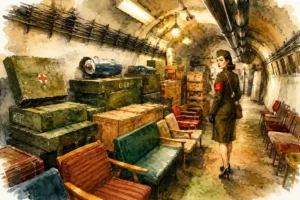
The most distinctive part of this tour is access to a real Cold War nuclear bunker, hidden beneath Prague.
This shelter was designed for civil defense during a potential nuclear conflict between NATO and the Warsaw Pact. Inside, you will see:
- Original ventilation systems and filtration equipment
- Emergency beds and command rooms
- Radiation monitoring tools
- Gas masks and protective gear
The bunker section is what sets this experience apart from general walking tours. It gives physical context to Cold War anxiety.
View ticket details and tour inclusions
What You Will Learn (Beyond the Obvious)
This isn’t just a political timeline. The strongest learning moments usually include:
How Fear Worked Practically
Visitors often assume repression was constant and visible. In reality, control operated through unpredictability. You’ll understand how uncertainty kept people compliant without open violence in daily life.
The Prague Spring Explained Clearly
The 1968 reform movement attempted to create “socialism with a human face.” The tour explains why those reforms frightened Moscow and why Warsaw Pact troops invaded Czechoslovakia.
Why the Velvet Revolution Was Peaceful
Unlike Romania’s violent transition, Czechoslovakia’s 1989 revolution was largely nonviolent. Guides explain the civic networks and student movements that helped keep protests organized and calm.
Is This Tour Emotional or Academic?
It balances both.
| Element | What to Expect |
|---|---|
| Historical Depth | Solid political context with dates and major figures |
| Personal Stories | Real anecdotes from families and dissidents |
| Atmosphere | Reflective rather than theatrical |
| Nuclear Bunker Visit | Hands-on visual experience |
Travelers who enjoy understanding the “why” behind monuments often rate this tour highly.
Real Experience Insights
Review Insight 1: Many visitors mention that the bunker visit exceeded expectations. What appears modest from the outside feels immersive underground.
Review Insight 2: Guides are frequently praised for balancing sensitivity with clarity when discussing surveillance and repression.
Review Insight 3: Several guests say this was the experience that helped them truly understand Prague beyond its medieval architecture.
How Long Is the Tour and Is It Physically Demanding?
Typical duration: 2.5 to 3 hours.
You’ll walk at a moderate pace in central Prague. Expect:
- Flat sidewalks
- Some standing periods
- Stairs when entering the bunker
Comfortable shoes are sufficient. No special equipment is needed.
Reserve your Prague communism history tour in advance
Who Should Take This Tour?
- History enthusiasts interested in the Cold War
- Travelers who want context beyond castles and cathedrals
- Students studying European politics
- Visitors curious about daily life under authoritarian regimes
If you are mainly seeking light entertainment, this tour may feel serious. If you want layered historical understanding, it’s a strong choice.
How This Tour Compares to Visiting the Museum of Communism
The Museum of Communism presents artifacts and exhibitions in one location. The walking tour complements that by placing events in physical space.
Many visitors combine both experiences for fuller context.
You can also consult the official Prague tourism portal at Prague.eu for broader historical background.
Related Reading
If you want deeper planning guidance, see:
- Prague Communism & Nuclear Bunker Tour Guide
- Detailed Prague Nuclear Bunker Tour Overview
- Cold War History Tour in Prague
For a full overview and booking guidance, visit the main hub page here:
Prague Communism Nuclear Bunker Tour Hub
Frequently Asked Questions
1. Is the nuclear bunker authentic?
Yes. It is a genuine Cold War civil defense shelter built during the communist era. Equipment and infrastructure reflect original use.
2. Are tours conducted in English?
Yes, English tours are standard. Other languages may be available depending on schedule.
3. Is this tour suitable for teenagers?
Generally yes, especially for students studying modern history. Some political discussions may be complex for younger children.
4. Does the tour focus only on communism?
The primary focus is 1948–1989, but guides provide context from WWII and post-war politics to explain how communism took hold.
5. How cold is the bunker?
Temperatures can be cooler than street level. Bringing a light jacket is recommended, even in summer.
6. Can I visit the bunker independently?
Public access is typically through organized tours rather than self-guided entry.
7. Is photography allowed?
Usually yes for personal use, but guides may mention specific restrictions onsite.
8. Do I need to book in advance?
Advance booking is strongly recommended, especially during peak tourist seasons from spring to early autumn.
9. Is the content politically biased?
The tour is generally fact-based and grounded in documented history. Guides rely on archival material and established research.
10. Will this replace a general Prague city tour?
No. It complements traditional sightseeing by focusing specifically on 20th-century political history.