
What Do You See on a Prague River Cruise? Route & Landmarks Explained
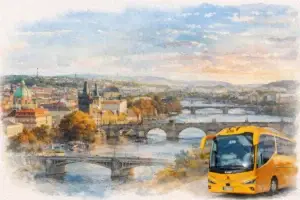
A Prague river cruise follows a central stretch of the Vltava River and passes some of the city’s most recognizable landmarks within a compact route. In under an hour, you typically see Prague Castle, Charles Bridge, Kampa Island, the National Theatre, and parts of the Old Town skyline—often from angles you cannot get on foot.
The route is not long, but it is dense. What makes it valuable is not distance, but perspective.
The Typical Prague River Cruise Route (Simple Overview)
Most sightseeing cruises operate on a loop in central Prague. Boats usually depart from docks near Čech Bridge (Čechův most) or Dvořák Embankment and travel both upstream and downstream for a short distance.
| Segment | What Happens | Key Views |
|---|---|---|
| Departure | Boarding near Old Town | Čech Bridge, Old Town skyline |
| Upstream | Boat moves toward Prague Castle | Castle complex, Charles Bridge |
| Turn Point | Near Strahov / castle side | Panoramic city view |
| Downstream | Return along opposite bank | National Theatre, Dancing House (sometimes) |
This loop is designed to maximize visibility of landmarks rather than cover distance. You stay within the most historic and visually rich section of the river.
Landmarks You Actually See (And From Which Angle)
Prague Castle (Pražský hrad)
This is the dominant feature of the cruise. From the river, you get a full, uninterrupted view of the castle complex sitting above the city. Unlike walking routes, there are no buildings blocking the perspective.
What stands out: the scale. From the water, it feels significantly larger than when viewed from inside the complex.
Charles Bridge (Karlův most)
You pass directly under or alongside this historic bridge depending on the route. From below, you notice details that are easy to miss on foot—statues, stone textures, and the spacing of the arches.
Practical insight: this is one of the few moments where photos feel “different” from typical tourist shots.
Kampa Island
A quieter area just beside the Lesser Town. From the boat, you see small riverside houses and greenery that contrast with the dense Old Town side.
Why it matters: it gives balance to the experience—less crowded, more local atmosphere.
Old Town Riverside
While Prague’s Old Town is famous, from the river you mainly see rooftops, church towers, and embankments rather than streets.
Expectation check: you won’t see the Astronomical Clock from the boat—it’s inland.
National Theatre (Národní divadlo)
The golden roof is visible from a distance and stands out especially during sunset or evening cruises.
Best moment: late afternoon light reflects strongly on the building.
What You Don’t See (Important for Expectations)
- No deep Old Town streets or squares
- No detailed interior views of landmarks
- Limited coverage beyond central Prague
This is not a transport experience—it’s a visual overview from the river.
If you want a deeper breakdown of how landmarks are positioned along the route, this detailed route and landmarks guide for Prague cruises explains each section more precisely.
Powered by GetYourGuide
How the Experience Changes During the Cruise
The route stays mostly the same, but what you see—and how you perceive it—changes depending on timing and conditions.
Daytime Cruises
Best for clarity. You can identify buildings, read architectural details, and understand the layout of Prague.
Good for: first-time visitors who want orientation.
Evening Cruises
Landmarks are lit, reflections appear on the water, and the city feels calmer.
Trade-off: less detail, more atmosphere.
Weather Impact
Cloudy days flatten colors but reduce glare. Sunny days improve contrast but can make photography harder.
Real Experiences From Travelers
Anna (Germany): “I expected a longer route, but actually everything important was packed into 50 minutes. The castle view alone made it worth it.”
Lucas (USA): “It’s not about discovering new places—it’s about seeing familiar ones differently. Under Charles Bridge was my highlight.”
Elena (Italy): “We did it on the first evening. It helped us understand where everything is before exploring on foot the next day.”
Is the Route Enough or Too Short?
This is one of the most common doubts. The answer depends on expectations:
- If you expect exploration → it feels short
- If you expect orientation → it feels efficient
The route is intentionally limited to the most iconic stretch of the Vltava River. Extending it would add less visually interesting areas.
For a deeper decision breakdown, you can read this honest review of whether a Prague evening cruise is worth it.
View current cruise times and ticket options
What You Notice Only From the River
- How compact Prague’s historic center actually is
- The elevation difference between Old Town and Castle District
- Architectural layering across centuries along the riverbanks
These are things you don’t fully understand when walking street level.
Timing Strategy: When Landmarks Look Best
Choosing the right moment affects what you see more than the route itself.
- Late afternoon: warm light on Prague Castle
- Sunset: reflections under Charles Bridge
- After dark: illuminated skyline
If you’re deciding between options, this guide to the best time for a Prague river cruise helps match timing with expectations.
Less Obvious FAQs About the Route
1. Do boats always pass under Charles Bridge?
Most standard routes do, but water levels or traffic can slightly alter positioning.
2. Is the left or right side of the boat better?
Both sides see major landmarks. The best choice depends on seating and rotation during the loop.
3. Are routes identical across all operators?
They are very similar. Differences are usually minimal and do not significantly change what you see.
4. Can you see Prague Castle the entire time?
No, but it appears during key sections and dominates the central part of the route.
Understanding the River Itself
The cruise takes place on the Vltava River, which runs through Prague and defines the city’s layout. Many of the landmarks you see were historically built facing the river because it was the main transport route.
Today, the river still acts as a visual corridor connecting Prague’s districts.
Why This Route Exists (And Hasn’t Changed Much)
The central stretch used by cruises is not random. It concentrates:
- Historic architecture
- Major bridges
- Open sightlines without obstruction
According to official Prague tourism resources, this area represents the cultural and historical core of the city.
The route is essentially a curated “visual summary” of Prague.
Practical Tips Before You Go
- Arrive early for better seating (especially upper deck)
- Bring a light jacket even in summer—wind on the river is noticeable
- Don’t rely only on photos—some views are better experienced directly
For more tactical advice, this Prague river cruise tips guide covers small details that improve the experience.
Final Orientation
A Prague river cruise is not about covering distance—it’s about seeing the city’s structure in one continuous view. In less than an hour, you connect Prague Castle, Charles Bridge, and the Old Town skyline into a single visual narrative.
If you approach it with that expectation, the route makes complete sense.
→ Explore the full Prague river cruise hub and plan your visit