
Neuschwanstein Castle Day Trip from Munich: Transport, Tickets & Timing
A Neuschwanstein Castle day trip from Munich is practical if you allow about 10–12 hours, reserve a timed castle admission, and start early. The simplest independent route is the train from Munich Hauptbahnhof to Füssen, followed by a local bus to Hohenschwangau; the journey usually takes around 2 hours each way. From the village, walk uphill for approximately 30–40 minutes, use the shuttle bus when operating, or take a horse-drawn carriage part of the way.
Castle tickets are sold for specific entry times, and availability can be limited, especially from April through October, on weekends, and during school holidays. Allow at least 3 hours in Hohenschwangau for the ticket-center transfer, uphill route, castle visit, and viewpoint. The castle’s seasonal visiting hours and admission prices can change, so check the official visitor information before travelling. A guided day tour is often easier when you want transport, ticket coordination, and a fixed schedule handled together.
Powered by GetYourGuide
1. Is a Neuschwanstein day trip from Munich worth doing?
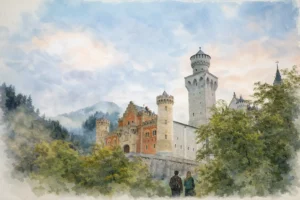
Yes, it can be a rewarding day trip, but it is not a quick excursion. The main attraction is the castle exterior, mountain setting, and views over the surrounding lakes and foothills. Inside, the visit is a short guided tour rather than an open-ended museum visit. Most independent visitors spend a full morning or afternoon travelling and several hours around Hohenschwangau.
The trip works best if you are comfortable with an early start, timed transport, uphill walking, and a return journey that may be affected by crowds or train delays. It is less suitable for a relaxed half-day itinerary. If you also want to see Linderhof Palace, do not try to combine both independently in one day; the connections are complicated. A dedicated Neuschwanstein and Linderhof day trip is more practical for that combination.
For a first visit, decide whether your priority is flexibility or convenience. Independent travel gives you more control over viewpoints and lunch, while an organized tour can reduce the risk of missing the castle entry time.
View available Neuschwanstein ticket options
2. How do you travel from Munich to Neuschwanstein Castle?
The standard public-transport route is train from Munich Hauptbahnhof to Füssen, then a local bus from Füssen station to Hohenschwangau. The castle is not in Füssen itself: Hohenschwangau is the village below the castle, and the ticket center is there.
- Start at Munich Hauptbahnhof. Check the day’s train departure and allow time to find the correct platform.
- Take the regional train to Füssen. The journey normally takes about two hours, although the exact timetable and any engineering works can change.
- Transfer at Füssen station. Local buses serving Hohenschwangau usually meet arriving trains, but crowded services can mean waiting for the next bus.
- Get off at Hohenschwangau, Alpseestraße. The ticket center, shuttle bus stop, carriage area, restaurants, and walking route are all nearby.
Buy or confirm the castle ticket before continuing uphill. A train ticket does not include admission to Neuschwanstein. On busy days, leave a generous buffer between arriving in Hohenschwangau and your reserved entry time.
Check current tour prices and availability
3. How long does the journey from Munich take?
Plan on approximately 2 hours by train from Munich to Füssen, plus around 10 minutes by bus to Hohenschwangau and additional time for waiting, walking, and ticket arrangements. In practice, the complete door-to-door journey from central Munich to the castle entrance often takes 2.5 to 3 hours each way.
A realistic independent itinerary might look like this:
| Part of the day | Typical allowance | What affects the timing |
|---|---|---|
| Munich to Füssen | About 2 hours | Train timetable, delays, and weekend crowding |
| Füssen to Hohenschwangau | About 10–20 minutes | Bus queues and traffic |
| Village and castle access | 45–75 minutes | Ticket-center queue, walking speed, shuttle availability |
| Castle visit | About 30–40 minutes | Timed tour and entry procedures |
| Return to Munich | About 2.5–3 hours | Descent, bus connection, and train delays |
For this reason, a departure around 6:00–7:00 a.m. is usually more comfortable than leaving late in the morning. Check the return timetable before entering the castle so you know how much time remains for the village and transport connections.
4. Where do you buy Neuschwanstein Castle tickets?
Tickets for Neuschwanstein are handled through the official ticket center in Hohenschwangau, not at the castle entrance. The ticket center is in the village below the castle. If you have booked a tour or timed visit in advance, follow the provider’s instructions carefully because collection points and deadlines can differ.
Admission is tied to a specific entry time. Arriving at the castle without a valid timed ticket does not guarantee entry, and arriving late may mean losing the visit. On busy dates, same-day tickets can sell out. It is sensible to reserve before travelling from Munich and to keep confirmation details available offline.
Prices, reduced fares, children’s conditions, seasonal opening hours, and reservation procedures can change. Check the official visitor information before booking, particularly if you are travelling in winter or on a public holiday.
See available dates and entry-time choices
5. What are the castle opening hours and admission prices?
Neuschwanstein uses seasonal schedules, and the ticket center may have different hours from the castle tours. Opening times and admission prices are revised from time to time, so treat any figure shown on an older itinerary as provisional. The official visitor website is the best place to confirm the current details.
As a planning guide, castle tours generally run longer hours in the warmer months and shorter hours in the colder months. The final admission time is earlier than closing time. Winter also brings shorter daylight, possible snow, and occasional access changes, so do not build an itinerary around the last available entry.
Budget for more than the headline admission price. Depending on your choice, extra costs may include a reservation or service fee, local bus fare, shuttle fare, food, and transport from Munich. A guided excursion may cost more than public transport alone but can include transport and ticket assistance.
Useful booking checks
- Confirm the date and exact entry time.
- Check whether admission is included or must be paid separately.
- Read the meeting-point instructions for an organized tour.
- Verify the cancellation and change policy before payment.
- Check whether the shuttle bus is operating on your date.
6. How do you get from Hohenschwangau to the castle?
From the village, there are three practical options. The walking route is free and takes roughly 30–40 minutes uphill, depending on pace and stops. It is paved in sections but still requires comfortable shoes, especially in wet or icy weather.
The shuttle bus runs uphill toward the Marienbrücke area when road and weather conditions allow. It does not normally deliver visitors directly to the castle entrance; you still walk downhill or along the access route for the final section. The shuttle can have queues, and service may be suspended in winter or during poor conditions.
Horse-drawn carriages provide another option for part of the ascent, but they also stop below the castle, leaving a walk to the entrance. Prices and operating arrangements are set locally and may vary. Do not assume that any option will be immediately available at your chosen time.
Visitors with limited mobility should review the access information in advance. The hill, uneven surfaces, queues, and final approach can make the visit challenging. Contact the official visitor service or your tour provider before booking if you need specific accessibility arrangements.
7. What should you see around Neuschwanstein besides the castle?
The Marienbrücke is the classic viewpoint for seeing Neuschwanstein from across the gorge. It can become crowded, and access may be restricted by weather or maintenance. Allow extra time rather than treating it as a guaranteed stop immediately before your tour.
Hohenschwangau Castle, the Alpsee, and the village restaurants provide additional options. You can also pause for lunch before returning to Füssen, although peak-hour queues are common. If your priority is photography, visit the viewpoint only after checking the time needed to reach the castle entrance.
Do not plan too many attractions around a fixed castle admission. The most common timing mistake is spending too long at the bridge or in the village and then rushing uphill. A simple plan with one viewpoint, the castle tour, and a meal is easier to manage.
For travelers who prefer a smaller vehicle and more flexible stops, compare the practical details of a small-group Neuschwanstein van tour before choosing.
8. Is a guided tour or independent trip better?
Independent travel is a good fit if you already know how to use regional trains, want to choose your own departure time, and are willing to monitor tickets and connections. It can be less expensive for some travelers, especially when transport is shared, but savings depend on the group size and ticket type.
A guided tour usually includes a direct coach or minibus, a host or guide, and assistance with the castle schedule. This removes the train-to-bus transfer and makes the day easier to follow. The trade-off is a fixed itinerary: you may have less time for an unplanned lunch, a long viewpoint stop, or independent exploration.
Read the tour description carefully. Important distinctions include whether the castle ticket is included, whether the guide enters the castle with you, the meeting point in Munich, the return time, and the policy for late arrivals. A Neuschwanstein bus tour from Munich can suit visitors who value straightforward transport and a structured schedule.
9. What do visitors say about the day trip?
Individual experiences vary with weather, crowd levels, transport conditions, and expectations. The following practical comments reflect the kinds of observations travelers commonly make after completing the trip; they should not be read as a guarantee of identical conditions.
“The train and bus connection was manageable, but we were glad we had left Munich early. The extra time made it possible to walk up instead of waiting for the shuttle.” — Independent visitor, spring trip
“The castle tour itself was shorter than expected, so the viewpoint and the walk around Hohenschwangau mattered just as much to us. Comfortable shoes made a noticeable difference.” — Couple visiting in summer
“The organized tour saved us from worrying about the return connection. The schedule was firm, but that was useful because our castle entry time was already arranged.” — Solo traveler on a guided excursion
The consistent lesson is to reserve the entry time first, then plan transport around it. Crowds and weather have a greater effect on the day than the castle tour duration itself.
10. What should you pack and know before booking?
Pack for a long day outdoors rather than only for an indoor attraction. The route includes waiting, walking, and exposure to changing mountain weather.
- Wear supportive shoes with good grip.
- Bring a light rain layer and an extra layer in cooler months.
- Carry water and a small snack, while leaving room for security or bag-size requirements.
- Keep your ticket confirmation, identification if required, and transport details accessible offline.
- Bring a charged phone and a backup battery for timetable checks and directions.
- Allow a buffer of at least 30–45 minutes before the castle entry time.
Large luggage is inconvenient and may not be accepted inside the castle. Check current bag rules before leaving Munich. Photography restrictions can apply inside, and the castle visit follows a timed route rather than allowing visitors to wander freely.
Families should consider the uphill walk, stroller limitations, and the length of the return day. Travelers with mobility concerns should ask about current access arrangements in advance instead of relying on the shuttle or carriage as a complete solution.
11. What is the safest way to plan the timetable?
Work backward from the castle entry time. If your ticket is for late morning, choose a Munich departure that reaches Hohenschwangau with enough time for the bus transfer, ticket-center procedure, and ascent. Do not use the earliest possible connection if a small delay would make you miss admission.
After the tour, allow time to return to the village, collect anything you left at a locker or accommodation, and board the bus to Füssen. On crowded days, the first bus you want may be full. A return train with some flexibility is safer than planning the final connection of the evening.
Use a written itinerary with these four checkpoints: Munich departure, Füssen arrival, castle entry, and Füssen return train. This is especially helpful when traveling with children or a group.
Simple one-day sample plan
- Early regional train from Munich to Füssen.
- Bus to Hohenschwangau and ticket confirmation.
- Walk, shuttle, or carriage toward the castle.
- Visit Marienbrücke if conditions and time allow.
- Enter Neuschwanstein at the reserved time.
- Return to Hohenschwangau for lunch and descend to the bus stop.
- Allow a buffer before the evening train back to Munich.
12. Where can you confirm official visitor information?
Before departure, confirm the current ticket rules, seasonal hours, admission conditions, access notices, and transport-related visitor information on the official Neuschwanstein visitor information page. This is particularly important for winter travel, public holidays, changing shuttle operations, and same-day availability.
For more planning help, see the wider Munich attractions and day-trip guide. The most reliable approach is to book a timed castle visit, leave Munich early, keep the route simple, and preserve enough buffer for the journey home.