
Munich Night Watchman Tour: Route, Stories & What to Expect
The Munich Night Watchman Tour is a guided evening walk through Munich’s historic Old Town, combining illuminated landmarks with stories about medieval guards, residents, crime, customs and daily life. The route generally begins near Marienplatz and continues through central Old Town streets, although the exact meeting point and route can change.
Expect a walking tour of about 2 hours, with most of the time spent outdoors on uneven historic streets and squares. The tour is usually best suited to visitors who enjoy local history, storytelling and a slower evening activity rather than a formal museum visit. Check the booking page for the current price, language, meeting point, available dates and cancellation terms before reserving.
- Location: Munich Old Town, usually around Marienplatz and nearby historic streets.
- Duration: Commonly around 2 hours, subject to the selected departure.
- Best for: First-time visitors, history enthusiasts, couples and families with older children.
- What to bring: Comfortable shoes, weather-appropriate clothing and a charged phone for directions.
- Important: The tour takes place outdoors at night, so confirm the meeting point and arrive 10–15 minutes early.
Powered by GetYourGuide
A night watchman tour gives you a different way to read Munich’s centre. Instead of moving from landmark to landmark during daylight, you follow a guide through streets where the evening atmosphere helps explain how the city was once protected, regulated and experienced after dark.
1. What is the Munich Night Watchman Tour?
The Munich Night Watchman Tour is a guided walking experience focused on the city’s historic centre. The guide presents the work of the night watchman, explains how residents dealt with darkness and danger, and connects those stories with visible landmarks in the Old Town.
The format is usually theatrical in tone without requiring guests to take part in a performance. The guide may use period details, anecdotes and traditional imagery to explain subjects such as closing gates, fires, curfews, suspicious strangers, street lighting and night patrols. The stories are designed to make the historic centre easier to understand rather than simply listing construction dates.
Because tour operators can change departure times, languages and routes, treat the booking page as the final source for practical details. The experience is not the same as a self-guided walk, since the historical context and storytelling are central parts of the evening.
Check current Munich Night Watchman Tour availability
2. What route does the tour follow?
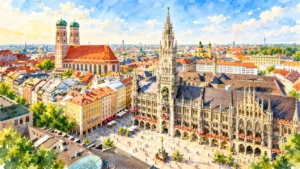
The route normally stays within Munich’s central historic district and often starts close to Marienplatz. Depending on the selected tour and current city conditions, the walk may pass prominent Old Town locations such as the Neues Rathaus, Frauenkirche, Peterskirche, nearby lanes, former civic buildings and historic squares.
The most useful way to think about the route is as a connected story rather than a fixed sightseeing checklist. The guide may pause at a major landmark to discuss how the area worked at night, then move into a smaller street where the scale and layout help illustrate medieval living conditions. Construction work, public events, religious ceremonies or crowd control can sometimes require a minor change.
For a broader daytime look at Munich’s central districts, you can compare the evening walk with a Munich Old Town walking tour. Doing both can help you notice how different the same squares and streets feel in daylight and after dark.
3. What stories and historical topics are covered?
The exact script belongs to the guide and may vary, but the subject usually centres on the practical realities of night-time life. Common themes include how a watchman patrolled streets, how fires were detected, how gates and doors were controlled, and why people were cautious about travelling after sunset.
You may also hear stories connected with local laws, religion, trade, punishment and social order. Munich’s Old Town contains churches, former civic spaces, commercial streets and narrow passages, so the guide can use the setting to explain how different groups lived and worked in close proximity.
Some stories are humorous or dramatic, while others describe uncomfortable aspects of historic life. Visitors should expect folklore and traditional anecdotes alongside historical explanation. A good guide distinguishes between a documented event, a long-standing local story and an entertaining interpretation; if a detail matters to you, ask how historians know it.
4. How long does the tour last and how much walking is involved?
Allow approximately 2 hours for the tour unless your selected booking specifies a different duration. The distance is usually manageable for an average visitor, but the experience involves standing and walking continuously rather than sitting between stops.
Munich’s centre is generally walkable, yet historic paving can be uneven. You may also encounter tram crossings, crowded pedestrian areas, steps or narrow sections. Wear shoes with secure soles and avoid planning a tight restaurant reservation immediately afterward.
If someone in your group has limited mobility, check the operator’s accessibility information before booking and contact the provider with specific questions. A route that is comfortable for one visitor may be difficult for someone using a wheelchair, walking aid or stroller, particularly where older paving or crowded lanes are involved.
View available dates and tour duration details
5. When does the Munich Night Watchman Tour operate?
Departures are generally scheduled in the evening, but the exact start time changes by season, day and availability. Sunset is earlier in winter and later in summer, so the atmosphere can differ even when the route remains similar. Some departures may begin before full darkness, especially during longer summer evenings.
Arrive 10–15 minutes before the stated start time. Meeting points in the centre can be busy, and a guide may not be able to wait for late arrivals once the group has started walking. Open the confirmation instructions before leaving your accommodation and allow extra time if you are travelling by public transport.
Do not rely on a generic online schedule for the day of your visit. Confirm the selected date, language, meeting point and local time in your reservation details, particularly if you are booking close to the visit date.
6. How much does the tour cost?
There is no single permanent price for every departure. The amount can vary according to date, group size, language, availability, booking conditions and any seasonal pricing. The most reliable figure is the total shown for your selected date before payment.
When comparing options, check what the price includes. A standard walking tour generally covers the guide and the scheduled route, while food, drinks, transport, attraction admission and personal purchases are usually separate unless clearly stated. The tour is primarily an outdoor storytelling experience, so do not assume that it includes entry to every building seen along the way.
Review the cancellation policy as carefully as the headline price. Evening plans can be affected by weather, illness or travel delays, and the conditions for changing or cancelling a reservation depend on the selected product.
See current prices and booking conditions
7. Is the tour suitable for children and families?
The storytelling format can work well for families with older children who enjoy history, mystery and walking. Children may find the watchman theme more engaging than a conventional lecture, especially when the guide explains how people dealt with fires, locked gates and dark streets.
It is less predictable for very young children. The tour takes place in the evening, includes sustained walking and may contain references to crime, punishment, illness or death. Ask the operator about the intended age range if you are unsure, and consider whether your child can stay attentive outdoors for the full duration.
Families should also plan for weather and toilet breaks. Restrooms are not necessarily available along the route, and the group may not be able to stop whenever needed. A light snack before the tour and warm layers in colder months can make the experience more comfortable.
8. What should visitors wear and bring?
Dress for the actual evening temperature rather than the temperature at lunchtime. Munich weather can change quickly, and standing still while listening may feel colder than walking continuously. A waterproof outer layer is more useful than an umbrella in crowded streets, although conditions vary.
- Footwear: Comfortable walking shoes with good grip.
- Clothing: Layers, plus a warm coat in autumn and winter.
- Weather protection: A compact waterproof layer and protection for phones or cameras.
- Navigation: Your booking confirmation and a charged phone.
- Health needs: Any medication, water and mobility support required for a two-hour walk.
Photography is usually possible in public areas, but avoid using bright lights or blocking the group. Follow the guide’s instructions near roads, cycle lanes and busy squares. Munich remains active at night, so the route is not isolated even when the subject matter is historical.
9. How should visitors prepare for the meeting point and booking?
Read the confirmation carefully because central Munich has several nearby squares, churches and public transport stops that can look similar on a map. Save the exact meeting point, identify the nearest station and allow time to walk from your accommodation. If the booking provides a guide description, clothing instruction or distinctive sign, note it before arriving.
Book ahead when your schedule is fixed, especially for weekends, holidays and tours offered in a particular language. Advance booking also lets you check the cancellation rules, participant limit and available start times rather than relying on a last-minute place.
For an alternative daytime food-and-history plan nearby, a Munich Old Town and Viktualienmarkt tour can fit well before the evening walk. Leave enough time between activities to eat, rest and reach the meeting point without rushing.
Check ticket availability for your preferred evening
10. What do participants say about the experience?
Feedback commonly focuses on the guide’s storytelling rather than on the number of landmarks visited. The following summaries reflect the kinds of comments visitors make after participating and should be read as representative impressions, not guarantees for every departure:
“The stories made places we had already seen during the day feel completely different at night.” This type of feedback is especially common from first-time visitors who want context for Munich’s historic centre rather than another photo stop.
“The guide was entertaining, but comfortable shoes were definitely necessary.” Participants often appreciate the relaxed pace while noting that the route involves more standing and walking than they initially expected.
“It was a good evening activity because we learned history without spending the whole night indoors.” This reflects the tour’s main strength for travellers who want a guided introduction to the Old Town after daytime attractions have closed.
Individual experiences depend on the guide, group size, language, weather and route conditions. If you prefer detailed architectural interpretation, a specialist indoor visit, or a quiet self-guided walk, compare the format before reserving. A night watchman tour is strongest when you enjoy spoken storytelling and are comfortable outdoors after dark.
What official Munich information is useful before the tour?
Munich’s official tourism resource provides a useful overview of the city’s districts and major sights, including central locations that may appear on or near walking routes. Consult the official Munich sights and districts overview to orient yourself before choosing where to meet, eat or continue your evening.
Use official route and booking information for current details, since streets, public events, construction and tour arrangements can change. The tourism overview is helpful for orientation, but it does not replace the specific meeting instructions in your reservation.
What is the best way to include the tour in a Munich itinerary?
Schedule the tour after a day that includes central attractions, but avoid filling every hour beforehand. The evening walk is more enjoyable when you are not exhausted from a full day of museums and shopping. A meal before the tour can be practical, provided you leave enough time to reach the meeting point.
Visitors interested in architecture may want to pair it with a daytime specialist experience, such as the Munich Law Library tour, while keeping the night watchman walk as a separate storytelling-focused activity. Check opening times and travel distances before combining both on the same day.
For wider planning ideas covering neighbourhoods, attractions and practical travel logistics, use the Visit Munich guide as a starting point. Keep the evening flexible because the tour’s value comes from paying attention to the streets and stories rather than rushing to the next item.