
Big Bus Munich Hop-On Hop-Off: Routes, Stops & Ticket Options
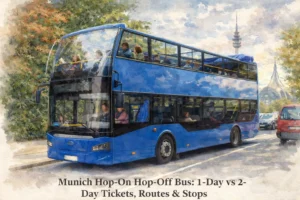
Big Bus Munich Hop-On Hop-Off is a practical way to see Munich’s main sights without planning every connection yourself. The tour typically covers central landmarks and selected areas such as the Old Town, English Garden, Schwabing, Nymphenburg and the Olympic Park, although the exact route and stops can change by season or operating day.
Ticket validity: Common options include 24-hour and 48-hour tickets. Price: Fares vary by date, ticket type, age and booking channel, so check the live rate before paying. Operating hours: The first and last buses, route frequency and seasonal service vary; confirm the timetable for your chosen date. Boarding: You can usually start at a central stop such as Hauptbahnhof and hop off at stops near the sights you want to visit.
For a first visit, the bus works best as a sightseeing overview or as transport between spread-out attractions. It is less useful for short Old Town distances, where walking is often faster. Reserve ahead if your schedule is tight, and check whether your ticket includes extras such as a walking tour, audio commentary or a second route.
Powered by GetYourGuide
Munich is compact in the centre but its museums, palaces, parks and Olympic attractions are spread across the city. A hop-on hop-off bus can reduce the need to study tram and underground connections, especially during a short visit. The main decision is not simply whether the bus is convenient; it is whether you will make enough stops to justify the ticket.
Read the Munich hop-on hop-off bus planning guide for a broader comparison of sightseeing by bus and public transport.
1. What is the Big Bus Munich hop-on hop-off tour?
Big Bus Munich is a sightseeing bus service that follows a planned city route and lets ticket holders get off at selected stops, visit nearby attractions, and board a later bus. The buses generally provide an elevated view of the city, recorded or live commentary depending on the service, and a simple way to connect major sightseeing areas.
This is different from a normal public bus. It is designed around sightseeing rather than commuting, so the route may take longer than a direct tram or underground journey. The advantage is that the route links places that are not all within comfortable walking distance, while the commentary can help you understand what you are passing.
Before booking, read the inclusions carefully. Some ticket types cover only the standard sightseeing loop, while others may include an additional route, a walking tour or an onboard guide. The available inclusions can vary by date and product.
Check current Munich bus prices and availability
2. Which routes and stops does Big Bus Munich use?
The route map can change, but the Munich sightseeing service is generally built around a central city loop with stops close to well-known attractions. Depending on the operating day, route and ticket selected, areas commonly associated with the tour include Munich Central Station, Karlsplatz, the Old Town, Odeonsplatz, the Pinakothek museums, English Garden, Schwabing, Nymphenburg and the Olympic Park or BMW Welt area.
Do not assume that every stop operates on every date. Seasonal changes, road closures, public events and traffic can affect the route. The most reliable approach is to check the current map and timetable immediately before your visit and then use the stop nearest to your first planned attraction.
| Area | What it can be useful for | Planning note |
|---|---|---|
| Hauptbahnhof and Karlsplatz | Starting the tour, shopping streets and central connections | Convenient for many hotels and rail arrivals, but traffic can be busy. |
| Old Town and Odeonsplatz | Marienplatz, the Residenz, Feldherrnhalle and historic city streets | Walking is often best once you are in the centre. |
| English Garden and Schwabing | Park scenery, cafés and northern central Munich | Allow extra time because the area is larger than a single landmark. |
| Nymphenburg | Nymphenburg Palace and its grounds | Check the stop location and palace opening information separately. |
| Olympic Park and BMW Welt | Olympic architecture, park walks and BMW exhibitions | These attractions need more time than a quick photo stop. |
Use the bus as a framework rather than trying to visit every stop. Munich’s official sightseeing information can help you understand how the main districts and attractions fit together: see Munich’s official overview of sights and districts.
3. How much do Big Bus Munich tickets cost?
There is no single price that applies to every booking. The fare normally depends on the validity period, passenger category, booking date and any extras included. Adult, child and family prices may be listed separately, and online prices can differ from rates available on the day.
The usual choice is between a shorter ticket for a quick overview and a longer ticket for a more relaxed itinerary. A 24-hour ticket can be enough if you plan one complete loop and two or three stops. A 48-hour ticket becomes more sensible if you want to divide sightseeing across two days, spend time at Nymphenburg or Olympic Park, or leave space for weather and restaurant plans.
Look for these details before checkout:
- Validity: Check whether the period starts at first use or at a fixed calendar time.
- Included routes: Confirm whether the ticket covers one loop or all available sightseeing routes.
- Child rules: Check age limits and whether an adult must accompany children.
- Cancellation: Read the refund and date-change conditions before payment.
- Meeting point: Confirm where mobile or voucher tickets can be exchanged or scanned.
See available Big Bus Munich dates and tickets
4. Is the 24-hour or 48-hour ticket better?
Choose 24 hours when your visit is short and your goal is to get oriented, ride most of the route and hop off at one or two priority stops. It can also suit travellers who are staying near the centre and mainly want a panoramic ride rather than transport all day.
Choose 48 hours when you want to combine central Munich with attractions farther out. For example, you might ride the full loop on the first day, then use the bus to reach Nymphenburg or the Olympic Park on the second day. The longer ticket also gives you more flexibility if traffic, rain, a museum visit or a late start disrupts the original plan.
Compare the extra cost with the number of journeys you realistically expect to make. If you will only ride once and spend the rest of the day walking around Marienplatz, a longer ticket is unlikely to add much value. If you plan to board several times across two days, the additional validity may be worthwhile.
5. How often do the buses run, and how long is one loop?
Frequency and total loop time are affected by season, traffic and the route in operation. A full sightseeing circuit can take considerably longer than a direct public transport journey, so do not build a tight museum or restaurant reservation around the bus timetable.
At the first stop, note the approximate departure times and ask staff which direction is most useful for your plans. Keep a small time buffer because a bus may arrive full, be delayed in traffic or require a change of vehicle. If you have an airport transfer, train connection or timed attraction booking, use the underground or tram as a backup rather than relying on the sightseeing bus.
A sensible day plan is to complete the route once without getting off, identify the areas you want to revisit, and then use later departures for selected stops. This avoids wasting time riding back and forth across the city.
6. Where should I start the tour?
Hauptbahnhof is often a convenient starting point because it is easy to reach by train, underground, tram and on foot from many central hotels. Karlsplatz can also work well if you are already near the pedestrian shopping area. The best start is usually the stop closest to your accommodation or first attraction, not necessarily the operator’s most famous departure point.
Arrive early if you want a particular seat, especially during weekends, school holidays and summer sightseeing periods. Check whether your ticket must be scanned on the first boarding and keep the booking confirmation accessible on your phone. A screenshot can be useful if mobile reception is unreliable, provided the ticket terms allow it.
For the first ride, sit on the side with the clearest view of the buildings and bring a light layer. Open-top seating can be windy even on a sunny day, while covered seating is more comfortable during rain or cooler weather.
7. What attractions are easiest to visit from the bus?
The service is most helpful for attractions that are separated by distance and require more than a few minutes of walking. Nymphenburg Palace, English Garden, Schwabing and the Olympic Park are examples where a sightseeing route can make the day easier. Central landmarks such as Marienplatz, the Viktualienmarkt, the Residenz and Odeonsplatz are generally close enough to combine on foot.
Plan each hop-off around opening hours, entry reservations and the time needed inside. A bus stop outside a palace does not mean the palace visit itself will be quick. Nymphenburg’s grounds can take longer than expected, and the Olympic Park is best treated as an area to explore rather than a single photo stop.
For central historic sights, a walking tour may provide more detail than the bus commentary. You can compare this format with a Munich Old Town walking tour if architecture, history and local context are your priority.
8. Is Big Bus Munich suitable for families, older travellers and people with limited time?
It can be a good fit for families because children can see several districts without repeated navigation, and adults can decide spontaneously where to get off. However, check accessibility and stroller arrangements before booking. The bus layout, boarding conditions and upper-deck stairs may not suit every passenger, and policies can differ between vehicles.
Older travellers may appreciate the reduced walking between districts, but the bus is not a replacement for walking at each attraction. Expect uneven pavements, steps at historic sites and additional distances from stops to entrances. Ask the operator about low-floor access, wheelchair spaces and whether mobility equipment can be stored.
For a very short visit, ride the full circuit first and then choose one nearby stop. Trying to cover the entire route, several museums and a palace in half a day usually produces more waiting than sightseeing.
9. What should I know about weather, seating and accessibility?
Munich weather can change quickly, and an open-top bus feels colder than street level. Bring a waterproof layer, sun protection and water. If rain begins, covered seats may fill quickly, so arrive at the stop a little earlier or be prepared to wait for the next departure.
Seats on the upper deck usually offer the best views but require stairs and may be unsuitable for some passengers. If you have a wheelchair, stroller or reduced mobility, contact the operator before booking and ask specifically about the vehicle scheduled for your date. Also check whether every stop is step-free; accessible boarding at one stop does not guarantee the same conditions elsewhere.
Large luggage is normally impractical on a sightseeing bus. Store suitcases at your accommodation or a station facility and carry only what you need for the ride and sightseeing stops.
10. Is Big Bus Munich worth booking?
Big Bus Munich is most likely to be worthwhile if you want a low-effort overview, are visiting for one or two days, or plan to see attractions outside the Old Town. It can also help first-time visitors understand the city’s layout before choosing where to spend more time.
It may be less good value if you are staying centrally, prefer public transport, or mainly want to visit sights around Marienplatz and Odeonsplatz. Munich’s underground, tram and walking routes can be faster for individual journeys. Compare the bus with a public transport or attraction pass before committing; the Munich City Card guide explains another way to think about discounts and transport.
Use this simple test: write down the stops you genuinely expect to use, estimate the number of boardings, and compare the ticket with single transport fares and your available time. The bus is paying for convenience, orientation and sightseeing commentary as much as for transport.
View booking options for your Munich visit
What do visitors say after taking the tour?
Experiences depend heavily on traffic, weather, crowd levels and the route running on the selected day. The following are representative firsthand feedback themes to help set realistic expectations, rather than promises about every departure.
Visitor impression 1: “The full loop was useful on our first afternoon because it showed us which areas we wanted to return to. We spent less time studying transport maps, but the ride was slower than walking in the Old Town.”
Visitor impression 2: “The upper deck gave us good views and the commentary added context, especially outside the centre. We were glad we had a flexible plan because traffic delayed the bus.”
Visitor impression 3: “The ticket worked well for reaching the farther attractions, but we did not get much value from hopping off at every central stop because the main sights were close together.”
What is the best way to plan Big Bus Munich with the rest of a trip?
Use the bus for orientation and longer connections, then walk once you reach a dense sightseeing district. A balanced itinerary could include one complete loop, a longer stop at either Nymphenburg or Olympic Park, and a separate walking period in the Old Town. Keep the first and last bus of the day out of a critical travel plan because schedules can change.
Check the live route, stop list, ticket validity and cancellation conditions immediately before booking. On the day, confirm the direction of travel at the stop and allow extra time for boarding. For broader planning ideas and neighbourhood choices, see the Visit Munich travel hub.
In short, Big Bus Munich is a convenient sightseeing tool rather than the fastest way to move around every part of the city. It makes the strongest case when your itinerary includes several separated attractions and you value a guided overview. It makes a weaker case when your plans are concentrated in the walkable centre.