
SUMMIT One Vanderbilt vs Empire State Building: Which Observation Deck Is Better?
If you want the sharper, more modern, more immersive experience, choose SUMMIT One Vanderbilt. If you want the classic New York landmark feeling and an open-air deck with history, choose the Empire State Building.
For most first-time visitors deciding between just one, SUMMIT usually feels more memorable. The Empire State Building still wins for old-school NYC atmosphere, especially if that iconic building matters more to you than mirrors, glass ledges, and interactive spaces.
Below, you’ll see the real trade-offs: views, atmosphere, photos, crowds, value, sunset timing, and who each deck suits best.
Quick answer: SUMMIT is better for wow factor and modern visuals; Empire State Building is better for classic identity and open-air skyline feeling.
| Best for | Choose | Why |
|---|---|---|
| First big wow moment | SUMMIT One Vanderbilt | More immersive and visually dramatic |
| Classic NYC bucket-list feeling | Empire State Building | Historic status and recognizable atmosphere |
| Modern photos | SUMMIT One Vanderbilt | Reflective rooms, glass elements, strong visual staging |
| Traditional skyline viewpoint | Empire State Building | Open-air 86th-floor experience |
Powered by GetYourGuide
What really separates these two observation decks?
These are not two versions of the same attraction. They create very different moods.
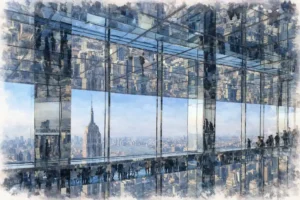
SUMMIT One Vanderbilt is built as a multi-sensory experience. It combines skyline views with mirrored environments, immersive design, glass ledges, and a more theatrical progression through the space. It feels curated for visual impact, and that is exactly why many visitors leave feeling that it was more than “just a view.”
The Empire State Building is different. It is about recognition, nostalgia, and place. The building itself is part of the attraction. The observatory visit carries the weight of New York history, and the open-air 86th-floor deck gives a more traditional “I am above the city” sensation that many travelers still prefer.
Head-to-head comparison
| Category | SUMMIT One Vanderbilt | Empire State Building |
|---|---|---|
| Overall style | Immersive, modern, sensory, visually designed | Classic, iconic, historic, straightforward |
| View style | Dramatic interior-exterior blend | Traditional skyline panorama |
| Outdoor feeling | Limited compared with ESB | Strong open-air feel on the 86th floor |
| Photo appeal | Excellent for polished, high-impact photos | Excellent for skyline and landmark-focused shots |
| Historic significance | Low | Very high |
| Experience pacing | More staged and sequence-based | More direct and familiar |
| Best for couples | Very strong, especially at sunset | Strong if you want classic romance over novelty |
| Best for families | Good if children enjoy visual environments | Good if you want a simpler visit |
| Best for repeat NYC visitors | Often the more interesting choice | Still valuable for the iconic experience |
Which view is actually better?
If by “better” you mean more emotionally impressive, SUMMIT often wins. The reason is not just height or glass. It is the way the experience frames the city. Reflection, light, interior design, and movement through the space make the skyline feel part of a larger visual event.
If by “better” you mean cleaner, more classic, less mediated skyline viewing, the Empire State Building has the advantage. Its 86th-floor observatory is open-air, and that changes everything. Wind, sound, and the direct feeling of the city below make the view feel more physical and less curated.
There is also one practical point many travelers care about: from SUMMIT, you get a fantastic perspective that includes the Empire State Building in the skyline. From the Empire State Building, of course, you cannot look at the Empire State Building itself. For many photographers and first-time visitors, that detail matters more than they expect.
Who should choose SUMMIT One Vanderbilt?
SUMMIT is usually the better pick if your trip priorities sound like this:
- You want one observation deck that feels new, polished, and distinctly different from older NYC attractions.
- You care a lot about visual design and photo opportunities.
- You want a date-friendly experience that feels memorable even before you get to the main viewpoint.
- You are only choosing one deck and want the one most likely to make people say “that looked incredible.”
- You are staying near Grand Central or already exploring Midtown East.
Official descriptions and tourism materials consistently frame SUMMIT as more than a standard observatory, emphasizing art installations, glass ledges, and exterior glass-floor elevators. That positioning matches how many visitors describe it in practice: not just a lookout, but a full visual experience.
Check SUMMIT ticket availability here
Who should choose the Empire State Building?
The Empire State Building is the better choice if your priorities are more traditional:
- You want to visit a world-famous New York landmark, not just a viewing platform.
- You care about history and classic skyline culture.
- You strongly prefer an open-air deck.
- You want a more direct observatory experience with less of a theatrical or immersive format.
- You love the feeling of doing the “real classic” version of a city attraction.
For some travelers, that last point is the entire decision. Even if SUMMIT feels more modern, the Empire State Building carries symbolic weight. It is one of those places that many people have wanted to see for years before ever visiting New York.
What real visitors tend to notice
Looking beyond marketing language, visitor reactions reveal a clear pattern.
SUMMIT guests often talk about the overall sensory effect, not only the skyline. One recent reviewer described it as “unforgettable,” highlighting the creative exhibits, elevator ride, and sunset atmosphere. Another praised the premium feel and smoother value of upgraded entry. At the same time, not every comment is glowing: one traveler reported that the view was excellent but queuing was frustrating, which is useful context if you are sensitive to crowd flow and waiting times.
The Empire State Building gets a different kind of praise. A 2025 reviewer called it the highlight of their New York trip and specifically recommended the 102nd floor for the quality of the views. Another visitor emphasized how striking the city looks at night and felt the higher level offered better photo opportunities with less crowd pressure than the main deck.
That split is revealing. SUMMIT tends to win on “wow, this is different.” The Empire State Building tends to win on “this felt like New York.”
My practical recommendation by traveler type
- Only one deck, first NYC trip: choose SUMMIT if you want the stronger visual impact; choose Empire State Building if the iconic building matters more than the format.
- Couple on a short trip: SUMMIT usually edges it because the whole visit feels more intentionally designed for atmosphere and photos.
- Traveler who loves historic landmarks: Empire State Building.
- Social-media-focused trip: SUMMIT.
- You dislike gimmicks and just want a clean city panorama: Empire State Building.
- You have already done Top of the Rock or another classic deck: SUMMIT may feel fresher.
Is SUMMIT better value for money?
Usually, yes—if you care about experience density. By that, I mean how much “distinctiveness” you get from one ticket.
The Empire State Building can still be worth every dollar, but its value is more dependent on your emotional connection to the landmark itself. If you arrive expecting the most innovative or visually layered observatory in New York, it may feel more straightforward than expected. SUMMIT, by contrast, is easier to perceive as a premium experience because the ticket covers a more stylized journey rather than just access to a view.
That does not mean SUMMIT is automatically the smarter purchase. Some travelers pay for modern presentation but later realize they would have preferred a simpler deck with stronger historic identity. This is why the “better” choice depends less on rating averages and more on what kind of memory you want to take home.
See SUMMIT booking options in advance
Sunset, daytime, or night: when does each one work best?
SUMMIT at sunset is often the strongest overall choice if you want atmosphere. The changing light interacts well with the mirrored and reflective spaces, so the experience feels especially cinematic late in the day.
Empire State Building at night has a strong case if your ideal memory is a classic urban skyline filled with lights. The open-air setting adds to that feeling in a way enclosed or highly curated spaces cannot fully replicate.
Daytime visits are more forgiving for practical sightseeing. If visibility is your top goal and you are less concerned with drama, daytime can work well at either deck.
Crowds, flow, and possible friction points
Neither attraction is immune to crowding. The real difference is how crowding feels.
At SUMMIT, bottlenecks can be more noticeable because the experience is staged and photo-oriented. When a room is designed for visual moments, people naturally pause longer. That can make the visit feel exciting or slow, depending on your patience level.
At the Empire State Building, the visit is easier to understand and often feels less performative. Even when busy, the purpose is more obvious: get up, see the skyline, stay as long as you want within the usual flow of the observatory.
If you are crowd-sensitive, timed entry still matters. Booking ahead is the safer move, especially for late afternoon and sunset windows.
FAQ
1. Is SUMMIT One Vanderbilt better than the Empire State Building for first-time visitors?
For many first-time visitors, yes. SUMMIT often leaves the stronger immediate impression because it combines skyline views with a more immersive environment. Still, if your dream is specifically to stand inside one of New York’s most iconic landmarks, the Empire State Building can be the more emotionally satisfying first choice.
2. Which observation deck has the more classic New York feeling?
The Empire State Building. Even before you reach the observatory, the identity of the building shapes the visit. It feels rooted in New York history in a way SUMMIT does not try to be.
3. Which one is better for photos?
SUMMIT is usually better for dramatic, modern, high-impact photos. The Empire State Building is better for traditional skyline photography and that unmistakable “classic NYC” visual language.
4. Is the Empire State Building more open-air than SUMMIT?
Yes. That is one of its clearest advantages. If you value the sensation of being outside above the city, the Empire State Building’s 86th-floor deck is a major reason to choose it.
5. Which one works better for couples?
SUMMIT often feels more memorable for couples because of the atmosphere, reflective spaces, and sunset appeal. The Empire State Building, however, can feel more timeless and romantic if you prefer iconic over modern.
6. Is SUMMIT too “Instagram-focused” for travelers who just want a view?
Not necessarily, but that impression exists for a reason. If you only want a direct skyline experience without immersive staging, the Empire State Building may suit you better. If you enjoy a visually designed attraction, SUMMIT rarely feels one-dimensional.
7. Which one is better in bad weather?
Neither is ideal when visibility is poor, but SUMMIT can still feel more layered because part of its appeal comes from the interior environment. The Empire State Building depends more heavily on the clarity of the actual outdoor skyline experience.
8. Should I book SUMMIT in advance?
Yes, especially for sunset or prime afternoon slots. Advance booking is the safer choice if timing matters, if you have a tight itinerary, or if you want to avoid settling for a less desirable time window.
9. If I already visited one, is the other still worth doing?
Yes. They are different enough that one does not fully replace the other. SUMMIT feels like a contemporary city experience; the Empire State Building feels like a landmark experience. Doing both is not redundant if you enjoy observation decks.
10. Which one should most travelers book if they can afford only one?
Most travelers today will probably be happier with SUMMIT One Vanderbilt because it feels more distinctive and more contemporary. But travelers who care strongly about New York history, architecture, and that classic open-air skyline moment may still prefer the Empire State Building.
Useful planning notes before you choose
In the final part of trip planning, it helps to compare timing and booking strategy, not just attraction style. If you are still deciding when to reserve, this guide on whether to buy SUMMIT One Vanderbilt tickets in advance can help. If value is your main concern, you may also want to read whether SUMMIT One Vanderbilt is worth it. And if you are focusing mainly on where to secure entry, this page on where to buy SUMMIT One Vanderbilt tickets adds more context.
For a neutral official overview of the attraction itself, you can also check the NYC Tourism page for SUMMIT One Vanderbilt.
View current SUMMIT entry choices
If you want the broader cluster page that connects pricing, booking timing, and related planning questions, visit the main guide here: SUMMIT One Vanderbilt tickets and price guide.