
Oktoberfest Weekend in Munich: The Best 2-Day Sightseeing Itinerary
A two-day Oktoberfest weekend in Munich works best when you combine one focused festival visit with a carefully timed city sightseeing plan. Spend Saturday at Oktoberfest, arriving before the busiest afternoon period, then use Sunday for Munich’s historic centre, the English Garden and a relaxed local meal.
- Best itinerary: Oktoberfest on Day 1; Munich Old Town and the English Garden on Day 2.
- Festival location: Theresienwiese, southwest of Munich’s central railway station.
- Suggested festival timing: Arrive around 10:00–11:00 and leave before the late-evening crowds if you want a calmer experience.
- Opening dates and hours: They change each year, so check the official Oktoberfest calendar before travelling.
- Entry: The festival grounds are generally free to enter, while beer-tent reservations, food, drinks, rides and attractions cost extra.
- Transport: Use Munich’s U-Bahn, S-Bahn, tram or walking routes; Theresienwiese is usually easier to reach by public transport than by car.
- Booking advice: Reserve accommodation and any guided activities well ahead, especially for the two main Oktoberfest weekends.
For a first visit, plan the festival around atmosphere, food and one or two rides rather than trying to cover every tent. Keep Sunday flexible so weather, tiredness and crowded transport do not spoil the rest of your Munich weekend.
Powered by GetYourGuide
Oktoberfest weekend in Munich: 10 practical FAQs
This itinerary is designed for a short stay, with realistic travel time and room for the festival’s crowds. Munich is walkable in the centre, but Oktoberfest can make stations, streets and restaurants noticeably busier than usual.
1. What is the best two-day itinerary for Oktoberfest weekend in Munich?
Use the first day for Oktoberfest and the second day for central Munich. This keeps the festival from competing with museum visits, church opening times or sightseeing reservations. It also gives you the option of leaving Oktoberfest when you have had enough instead of treating it as a quick stop between attractions.
Day 1: Oktoberfest and nearby Munich. Have breakfast before travelling to Theresienwiese, arrive in the morning, and walk through the festival grounds before the largest crowds develop. Look around the main beer tents, browse the food stalls and choose a small number of rides or attractions. Take a proper break in the afternoon, then decide whether to remain for dinner and the evening atmosphere. If you still have energy, walk through the nearby Ludwigsvorstadt district rather than adding a distant attraction.
Day 2: Old Town, museums and the English Garden. Start at Marienplatz, see the Neues Rathaus and Frauenkirche, then continue through the Viktualienmarkt area. Choose one major indoor attraction, such as the Munich Residenz or a museum, rather than attempting several large museums in one day. In the afternoon, walk toward the English Garden or take public transport to save time. End with dinner in a booked restaurant or a quieter neighbourhood beer hall.
Keep the order flexible. If rain is forecast, move the Residenz or a museum earlier. If you are travelling with children, reduce the walking distance and allow time for the festival’s family-friendly attractions.
View available Oktoberfest ticket options
2. How should I plan the first day at Oktoberfest?
Arrive with a simple plan rather than a packed schedule. Enter through the festival grounds, get oriented, and decide whether your priority is a beer tent, traditional food, rides or the general atmosphere. The grounds are large, and moving across them takes longer when pedestrian routes are crowded.
- Eat before drinking. Start with breakfast and have food early at the festival. Pretzels, roast chicken, sausages and vegetarian dishes are widely available, but queues can grow at peak times.
- Choose your tent strategy. A beer-tent reservation is useful for a group that wants a guaranteed table, but it may involve fixed times, minimum spending or advance booking conditions. If you do not have a reservation, go early and ask staff where visitors may sit.
- Carry less. Large bags and unsuitable luggage can be refused or slowed by security. Bring only essentials, such as a phone, payment method, identification, medication and a light layer.
- Set a meeting point. Mobile signals and messages can be unreliable in dense crowds. Agree on a visible location outside the tent or grounds before splitting up.
Do not assume you can walk into any tent at any hour. Capacity controls may close entrances, particularly on Friday and Saturday evenings. A morning or early-afternoon visit is usually easier for travellers who want to see the festival without spending the entire day in a queue.
Check current Oktoberfest booking availability
3. What should I know about Oktoberfest opening times, prices and reservations?
Oktoberfest dates and exact operating hours vary by year, so confirm them before booking flights or timed activities. The festival grounds normally do not require a general admission ticket, but your total budget depends on food, drinks, rides, transport and any reserved seating.
| Item | What to expect | Planning advice |
|---|---|---|
| Festival entry | Usually free for the main grounds | Allow time for walking and possible capacity controls |
| Beer-tent seating | Free seats may be available, while reservations have their own conditions | Check reservation rules and minimum spends before paying |
| Food and drinks | Prices are set by individual tents and vendors and change annually | Check menus or ask the server before ordering several items |
| Rides | Each attraction charges separately | Set a cash budget so spending remains predictable |
| Transport | Munich public transport uses zone and ticket rules that depend on the journey | Use the official MVV or DB journey planner on the day |
The official Munich information page is the most reliable place to verify festival dates, hours and practical notices. Conditions can change because of crowd levels, weather, security measures or special events.
See available dates and activity options
4. What is the best way to get to Theresienwiese?
Public transport is normally the simplest option. Depending on your starting point, you can walk from München Hauptbahnhof, use the U-Bahn to Theresienwiese or Schwanthalerhöhe, or use nearby S-Bahn connections and walk the final distance. Stations close to the grounds can become crowded, so follow staff directions rather than forcing your way onto a full train.
From the central station, the walk is manageable for many visitors and lets you avoid changing trains. Wear comfortable shoes because the festival grounds are extensive and you may stand for long periods. Taxis and ride-hailing vehicles can be affected by road closures and designated drop-off points, so they are not always faster.
Do not drive to Oktoberfest unless there is a specific reason and you have confirmed parking in advance. Beer consumption, road congestion and restricted access make a car inconvenient. If you are staying outside central Munich, check your last return connection before entering a tent, especially on a Sunday evening.
5. How can I fit Munich’s main sights into the second day?
Begin in the Old Town because it places several major sights close together. A practical morning route is Marienplatz, the Neues Rathaus exterior, Frauenkirche, the pedestrian streets around Kaufingerstrasse and Viktualienmarkt. The famous Rathaus-Glockenspiel has scheduled performances on selected days and times, but confirm the current schedule rather than planning your entire day around it.
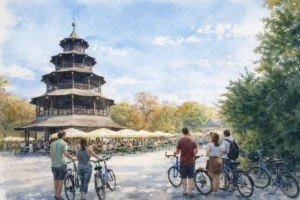
After lunch, choose one substantial attraction. The Munich Residenz is convenient for history and interiors, while the Deutsches Museum is better for science and technology but requires more time. If you prefer a lighter afternoon, walk through the English Garden, see the Eisbach surfers from a safe viewing area and continue toward the Chinese Tower or a nearby café.
- Short walking plan: Marienplatz, Frauenkirche, Viktualienmarkt and one museum.
- Outdoor plan: Old Town in the morning, English Garden after lunch and an early dinner.
- Rainy-day plan: Marienplatz, the Residenz and a covered market or museum.
- Family plan: Fewer historic interiors, more open space and a planned rest stop.
For more ideas that fit around festival crowds, see this guide to things to do in Munich during Oktoberfest.
6. Where should I stay for an Oktoberfest weekend?
Staying near the central station, Ludwigsvorstadt, Hauptbahnhof or the Old Town usually gives the best balance of access and sightseeing. You can walk to Theresienwiese from several central areas and reach museums, restaurants and public transport without long transfers.
Choose accommodation based on sleep, not just proximity. Streets close to the festival may be noisy, and prices often rise during Oktoberfest. If you stay farther out, check the evening train frequency and the walking route from the station. A room with flexible cancellation can be useful because plans and travel conditions may change.
Book early for Friday and Saturday nights. If central hotels are unavailable or too expensive, look along a direct U-Bahn or S-Bahn route rather than choosing a cheaper room that requires several late-night changes.
7. What should I wear and bring to Oktoberfest?
Comfort and weather protection matter more than traditional clothing. Lederhosen and dirndls are optional, and poorly fitted costume clothing can be uncomfortable during a long day. Wear closed, supportive shoes, a layer for cool evenings and a waterproof jacket if rain is possible.
Bring a small permitted bag, phone, identification, payment method and any essential medication. Check the current bag policy before travelling because security rules can restrict size and contents. Avoid bringing glass, large umbrellas, professional camera equipment or luggage unless the official rules clearly allow them.
Traditional clothing should be worn respectfully and practically. Fasten belts and straps securely, avoid loose accessories on rides, and remember that tents can become warm even when the weather outside is cool.
8. How much time and money should I allow?
A full festival day can easily last six to eight hours, but two to four hours is enough for a first look if your priority is Munich sightseeing. Budget separately for transport, food, drinks, rides and reservations. Prices change each year, so avoid relying on old online figures when setting a precise budget.
A useful approach is to decide your spending limit before arriving. Keep a small reserve for an unexpected train change or a meal after leaving the grounds. Card payment availability varies by vendor, and crowded conditions can make payment slower, so ask before ordering and carry an appropriate backup payment method.
Do not schedule a non-refundable evening tour immediately after Oktoberfest. Delays at exits, crowded stations and the time needed to return to your hotel can easily make a tight connection stressful.
9. Is Oktoberfest suitable for families and first-time visitors?
Yes, but the experience depends strongly on timing and location. Families and first-time visitors usually find mornings and weekdays calmer than Saturday evening. The festival includes rides, food stalls and areas that do not centre on beer, but loud music, dense crowds and alcohol consumption are part of the setting.
Set a clear meeting point, keep children close in busy areas and take regular breaks. Use toilets before queues become long, carry weather-appropriate clothing and identify a quieter route out of the grounds. Young children may enjoy a shorter visit more than an all-day schedule.
First-time visitors can also use the Oktoberfest first-timer guide for practical advice on tents, etiquette, clothing and what to expect.
What visitors commonly notice
“The morning was the easiest time to explore. We could see the tents, find food and take a few rides before the walking routes became crowded.” — Elena, visited Oktoberfest on a Saturday
“Staying near the central station made the weekend much simpler. We walked to the festival and still had enough energy for the Old Town the next day.” — Martin, two-night Munich visitor
“The best decision was not booking too much on Sunday. We started with Marienplatz, chose one museum and left time for the English Garden.” — Priya, first-time visitor
10. What should I check before booking this Munich weekend?
Confirm the Oktoberfest dates, festival hours, accommodation cancellation terms and your transport route before paying for anything. Then check whether any beer-tent reservation or guided activity has fixed entry times, minimum spending requirements or restrictions on bags and luggage.
Use the official Munich Oktoberfest information page for current dates, opening information and official visitor notices. This is especially important because details can change from one festival year to the next.
- Before booking: confirm dates, hotel location, cancellation rules and arrival times.
- Before departure: check weather, public transport disruptions, bag rules and payment options.
- On the day: eat before drinking, agree on a meeting point and keep your itinerary flexible.
- For Sunday: reserve only one or two timed attractions and leave room for walking, meals and rest.
For broader trip planning, use the Munich Oktoberfest planning guide, then browse the complete Munich travel hub for neighbourhoods, transport and additional sightseeing ideas.
A successful Oktoberfest weekend is less about fitting in every attraction and more about making the festival the centrepiece of one day while protecting the second day for Munich itself. Book the essentials early, verify changing details through official sources and leave enough margin for crowds.