

Who will enjoy the National Maritime Museum most?
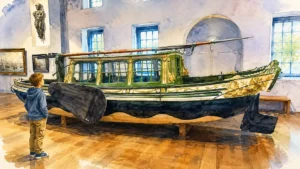
The museum is easiest to recommend to travelers who like history told through real objects rather than text-heavy galleries alone. You will see naval paintings, navigation instruments, decorative ship models, sea charts, globes, weapons, and exhibits about trade, exploration, migration, and daily life at sea. The building itself adds a lot to the visit: it is a former 17th-century naval warehouse near the historic port area, so the setting feels relevant rather than random.
In practical terms, this museum works especially well for:
- Couples wanting a quieter cultural stop away from the busiest museum district
- Families with children who need interactive elements and space to move around
- Anyone interested in Dutch Golden Age history beyond paintings
- Travelers looking for a museum that feels substantial without becoming overwhelming
- Visitors who have already seen Amsterdam’s headline museums and want something different
If your main question is value for time, the answer depends on your interests. For maritime history fans, it is an easy yes. For general travelers, it is still often worth it because it combines architecture, storytelling, water views, and hands-on exhibits in one visit.
What makes it different from other Amsterdam museums?
Many Amsterdam museum visits are centered on art, famous names, or compact canal houses. The National Maritime Museum offers a broader civic and historical lens. Instead of focusing on one artist or one wartime story, it explains how shipping, navigation, colonial trade routes, naval power, cartography, and overseas connections shaped the city and the Netherlands.
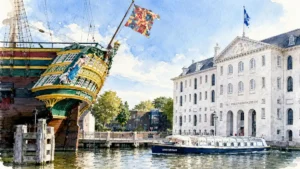
That makes the museum feel more layered. One room may focus on ceremonial ship decorations; another may look at navigation technology; another may explore how Amsterdam connected to the wider world. The outdoor element, including the replica ship, also changes the pace of the visit. It feels less like moving from frame to frame and more like following a story through spaces.
There is also a practical advantage: compared with the most famous museums in central Amsterdam, visitors often report that this one feels calmer and less compressed. You can usually spend time with displays more comfortably.
Check National Maritime Museum ticket options
What you actually see inside
The museum is broad enough that two visitors can walk out talking about different highlights. Some go for the architecture and courtyard roof, others for the ship replica, and others for the historic collections.
Main highlights
- The replica VOC ship Amsterdam: For many visitors, this is the most memorable part. Boarding a large historic-style vessel gives context that glass cases cannot.
- Historic maps and globes: These help explain how Dutch maritime power connected to trade and exploration.
- Ship models and maritime art: Excellent for understanding ship design, symbolism, and naval culture.
- Interactive exhibits: Useful for children and adults who learn better by doing than by reading.
- The building itself: The restored naval warehouse and central courtyard are attractions in their own right.
The exhibits are generally clearer and more accessible than some highly specialized maritime museums. You do not need expert knowledge to appreciate the visit.
How long should you plan for?
Most visitors should allow 2 to 3 hours. If you like reading panels carefully, exploring temporary exhibitions, and spending time on the ship, 3 hours is realistic. Families may stay longer if children engage with interactive zones, though the pace can vary a lot.
If your Amsterdam itinerary is packed, this is one of the more manageable museums to fit into a half day. It is not the kind of place that demands six hours to feel worthwhile, but it also rewards a slower visit.
| Visitor type | Suggested time | Why |
|---|---|---|
| Quick cultural stop | 1.5 to 2 hours | Enough for key galleries and the ship |
| Most travelers | 2 to 3 hours | Balances highlights with time to explore |
| History enthusiasts | 3 to 4 hours | More time for detailed exhibits and reading |
| Families with children | 2 to 3.5 hours | Depends on breaks and interactive engagement |
Is it good value for money?
For many travelers, yes. Amsterdam museum tickets are not cheap in general, so the question is really whether the content, atmosphere, and time spent feel proportionate. Here, they usually do. You get a major historic building, permanent collections, access to the ship experience, and regularly changing exhibitions. That creates a fuller outing than some smaller museums with a narrower focus.
Advance booking also makes the experience smoother. It reduces one more uncertainty on busy sightseeing days and helps if you are trying to sequence museums, canal activities, and walking routes efficiently.
View fast-track museum entry details
Best reasons to visit
- You want more than art museums. This museum adds variety to an Amsterdam itinerary and gives context to the city’s historical prosperity.
- You appreciate immersive history. The ship replica and large-scale objects make the past easier to visualize.
- You are traveling with children. It is one of the more family-friendly major museums in the city.
- You prefer a calmer museum environment. It often feels less crowded than top-tier headline attractions.
- You are curious about Amsterdam’s relationship with water. The museum connects the city’s geography, trade networks, and identity very clearly.
Reasons it may not be worth it for you
Not every museum suits every trip. You may want to skip it if:
- You only have one museum slot and your priority is world-famous painting collections
- You have very limited time and want attractions clustered around Museumplein
- You do not enjoy history displays, models, maps, or object-based collections
- You are looking for a highly emotional or intimate museum experience rather than a broad institutional one
That said, people who are unsure about maritime history often end up liking this museum more than expected because it is really about Amsterdam’s development, trade, travel, and global connections, not just ships alone.
Experience-based impressions from visitors
Review insight 1: A common reaction is surprise at how much there is to see beyond the headline ship. Visitors often arrive expecting a niche museum and leave saying it felt broader, brighter, and more engaging than anticipated. That is usually a strong sign that expectations were exceeded.
Review insight 2: Families frequently comment that the museum is easier with children than many traditional museums. The wider layout, interactive elements, and chance to board the vessel help break up the visit.
Review insight 3: Some adults note that the museum works best when you have at least moderate interest in history. People seeking only quick photo stops may not get full value, while those willing to slow down tend to rate it highly.
Practical pros and cons
| Pros | Cons |
|---|---|
| Distinctive museum in a historic naval building | Less essential than Amsterdam’s top art museums for first-timers with very limited time |
| Good mix of objects, stories, and interactive elements | Some galleries may feel specialized if maritime history is not your interest |
| Appeals to both adults and children | Location may require a bit more planning than Museumplein sights |
| Usually more relaxed than the city’s busiest museums | To appreciate it fully, you need more than a rushed one-hour stop |
| Replica ship adds memorable hands-on dimension | Not the right choice if your trip focus is strictly famous masterpieces |
Tips to get more from your visit
- Book ahead if your schedule is tight, especially on weekends or school holiday periods.
- Give yourself at least 2 hours so you are not rushing straight past the strongest galleries.
- Pair it with a waterfront walk or the nearby eastern docklands area for a more coherent day.
- Visit earlier in the day if you prefer quieter galleries and easier pacing.
- Do not skip the ship, even if you normally move quickly through museums.
If timing matters, this guide on the best time to visit the National Maritime Museum in Amsterdam can help you avoid busier periods and choose a more comfortable slot.
Should you buy tickets in advance?
In most cases, yes. Pre-booking is the safer choice if the museum is an important part of your Amsterdam plan. It reduces friction on the day, helps you organize your route, and can be useful during high-demand travel periods.
For many travelers, the practical question is not only whether tickets sell out, but whether they want to spend time checking availability while already in the city. Booking in advance removes that issue.
If you want a clearer breakdown of timing, crowds, and booking logic, read this guide on whether you need to book National Maritime Museum tickets.
See available entry times and prices
Verdict: is the National Maritime Museum in Amsterdam worth visiting?
Yes, for most travelers it is worth visiting if you want a museum that adds context to Amsterdam beyond canals and paintings. It is especially worthwhile if you like history, ships, maps, trade stories, and museums that feel less crowded and more flexible than the city’s biggest headline attractions. The combination of architecture, interactive displays, and the replica ship gives it broader appeal than the word “maritime” sometimes suggests.
It moves from a good choice to an excellent one if you are traveling with kids, revisiting Amsterdam, or building an itinerary that balances famous sights with more original stops. If your time is extremely limited and you only want the city’s most iconic art institutions, it may not be first on your list. For many others, though, it is one of Amsterdam’s more underrated museum experiences.
For a broader overview of planning, prices, and practical visitor advice, see our Amsterdam National Maritime Museum tickets guide.
FAQs
1. Is the National Maritime Museum suitable for children?
Yes. It is one of the better museum choices in Amsterdam for families. The interactive elements, open layout, and ship replica help keep children engaged. It is still a museum rather than a full play space, but many parents find it easier than more formal galleries.
2. How far is it from central Amsterdam?
It is relatively close to the center, but not directly in the Museumplein cluster. Depending on where you start, you may walk, cycle, or use public transport. The route is usually straightforward, but you should factor in a little extra travel time compared with attractions in the central canal belt.
3. Can you visit quickly in under two hours?
Yes, but that is best for travelers who only want the highlights. A short visit can still be worthwhile if you focus on the main galleries and the ship. However, the museum is more satisfying when you allow at least 2 hours.
4. Is it interesting if I am not especially into ships?
Often, yes. The museum is not only about ship technology. It also covers Amsterdam’s commercial growth, global connections, navigation, maps, and cultural exchange. Visitors without a specific maritime interest often enjoy the broader historical themes.
5. Does the museum feel crowded?
Compared with Amsterdam’s highest-profile museums, it often feels more manageable. That does not guarantee empty galleries, but the space and layout usually create a more relaxed experience. Booking ahead still helps if you want a smoother day.
6. Is the replica ship included in the visit?
Typically, the ship is one of the core highlights connected with the museum experience, though visitors should always confirm current access details when planning. Weather, maintenance, or operational changes can occasionally affect what is open.
7. What is the best time of day to go?
Earlier entry is usually the easiest option if you prefer a quieter pace. Morning visits often feel calmer, and they leave room for another attraction later. If you are planning around school holidays or weekends, early slots are even more useful.
8. Is it worth visiting on a first trip to Amsterdam?
Yes, if you want to understand the city’s history more deeply or avoid an itinerary built only around the most crowded attractions. On a first trip with very limited time, some travelers may prioritize other museums first. But this museum is still strong enough to deserve consideration.
9. Should I choose this museum over an art museum?
That depends on your priorities. If seeing iconic paintings is your main goal, choose an art museum. If you want historical context, architecture, and a more varied, object-based experience, the National Maritime Museum may be the better use of your time.
10. Where can I check official visitor information?
You can confirm opening hours, access details, and visitor updates on the official museum page: Het Scheepvaartmuseum visitor information. For broader city museum information, see Amsterdam museums information.
For the full planning hub, ticket tips, and linked guides, visit our main National Maritime Museum Amsterdam guide.