

How to visit the Anne Frank House without making common mistakes
The Anne Frank House is one of Amsterdam’s most meaningful places to visit, and it requires more planning than many first-time visitors expect. The biggest mistake is assuming you can simply show up and buy a ticket. In practice, timed-entry booking is the norm, and availability can disappear fast around weekends, holidays, and school breaks.
If your main goal is to go inside the museum, the safest plan is to monitor official ticket availability and book as soon as your dates are fixed. If your main goal is to understand Anne Frank’s story in Amsterdam, pairing the museum with a walking tour can be even more useful than rushing through the house without context.
Many travelers find that the emotional weight of the visit is stronger when they first learn about the Frank family, the Nazi occupation, and the neighborhoods connected to Jewish history in Amsterdam. That background helps the museum feel less like a short attraction and more like a serious historical visit.
What to book first
Book your Anne Frank House ticket first if going inside the museum is essential to your trip. Build the rest of your day around that timed slot. The visit is structured, and late arrival can create unnecessary stress, especially in a busy part of the city.
If official museum tickets are sold out, a guided walk is the next-best option. This works especially well for people who want historical explanation, local orientation, and a more complete understanding of wartime Amsterdam beyond the museum walls.
Check Anne Frank tour availability
What the Anne Frank House visit is actually like
The museum experience is quiet, reflective, and quite different from a standard sightseeing stop. The building includes the secret annex area associated with Anne Frank and the historical story of those who hid there. Visitors move through the space in a respectful flow, and the emotional tone is usually subdued.
Do not expect a long, leisurely museum day with cafés, open seating, and broad galleries. This is a focused visit. For that reason, planning the rest of your schedule carefully matters. A rushed museum slot between canal cruising and shopping often feels mismatched.
It also helps to prepare for stairs, narrow spaces, and a serious atmosphere. Some visitors are surprised by how compact the building feels. Others are surprised by how powerful the experience is even if the visit itself is not very long.
Good reasons to combine the museum with a walking tour
- You understand the wider history of Amsterdam during occupation.
- You get context on the Jordaan, Westermarkt, and nearby landmarks.
- You avoid feeling lost if museum audio or displays leave you with questions.
- You still have a meaningful Anne Frank-focused experience if museum tickets are unavailable.
Best time of day to visit
There is no perfect universal time slot, but earlier or calmer periods usually feel easier logistically. Midday can be busier in central Amsterdam, with more foot traffic around trams, canals, and nearby shopping streets. If you prefer a quieter pace before the museum, choose a time that leaves room for a slow walk and an on-time arrival.
For many travelers, morning works well because the day feels less rushed. Others prefer late afternoon so they can explore the neighborhood first. The best option depends on your style: if you like to read every panel and sit with the experience afterward, avoid stacking too many attractions on the same day.
| Visit Option | Best For | Main Advantage | Watch Out For |
|---|---|---|---|
| Official museum timed entry | Travelers who want to see the house itself | Direct access to the museum | Can sell out fast |
| Walking tour near Anne Frank House | Visitors wanting historical context | Guided explanation from a local | May not include museum entry |
| Museum + independent neighborhood walk | Self-guided travelers | Flexible and budget-aware | Requires more planning |
How early should you arrive?
Arrive in the area early enough that you are not navigating central Amsterdam under pressure. Around 15 to 30 minutes early is a practical buffer for most people. That gives time for walking from public transport, finding the correct entrance area, and settling into the visit mentally.
The neighborhood can look deceptively easy on a map, but canals, foot traffic, bikes, and tram crossings can slow you down. If you are staying outside the center, allow extra time. Amsterdam distances are manageable, but moving through the city is not always as fast as expected.
How to get there
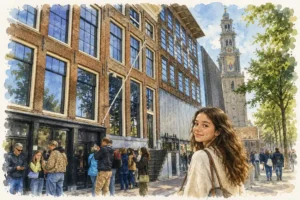
The Anne Frank House is near Westermarkt in central Amsterdam. Most visitors reach it on foot, by tram, by bike, or via a short taxi ride from another district. Walking is often easiest if you are already in the canal belt, Jordaan, or central station area.
Public transport is useful, but remember that the final few minutes are usually on foot. If weather is poor, wear shoes that can handle wet pavement. Amsterdam’s charm includes uneven streets, bridges, and occasional rain, and that affects comfort more than many travelers expect.
Simple route-planning tips
- Save the museum location in your phone before leaving your hotel.
- Check tram disruptions on the day of your visit.
- Allow extra time if traveling with children or older relatives.
- Do not plan an immediate tight connection after your entry slot.
See small-group walking tour details
Is a guided tour worth it?
For many people, yes. A guide helps connect Anne Frank’s story to real streets, wartime restrictions, hiding places, deportation history, and the Jewish neighborhoods of Amsterdam. That turns the visit from a museum stop into a fuller understanding of place.
This is especially helpful if you are traveling with teenagers, if you prefer spoken storytelling over reading museum panels, or if you want someone to answer questions in real time. Neutral, knowledgeable local guides often make difficult history easier to follow without making it feel simplified.
A guided walk can also be the most practical fallback when the museum is sold out. While it is not the same as entering the house, it still provides depth and structure. For travelers with limited time, that can be a very worthwhile choice.
Practical expectations inside and around the museum
Keep your schedule realistic. You may spend more emotional energy here than at other museums. Many visitors naturally slow down, read more carefully, and leave wanting a quiet break rather than another packed attraction.
Nearby canals and side streets are good for a short decompression walk afterward. Some travelers prefer to sit somewhere simple and process the visit. Others continue with a broader Jewish history route through the city. There is no single right way to structure the day, but giving yourself some breathing room usually improves the experience.
What makes the visit smoother
- Booking early and screenshotting your confirmation
- Wearing comfortable shoes for walking and standing
- Arriving without an overloaded sightseeing schedule
- Reading a little background beforehand
- Choosing a guided option if you want more context
Experience-based observations from visitors
One common review pattern is that the visit feels shorter than expected but more affecting than expected. That combination catches people off guard. A traveler may spend only a limited amount of time inside, yet remember it more vividly than larger museums.
Another frequent impression is that context makes a major difference. Visitors who took a walking tour first often say they better understood how the Frank family’s story fit into the city around them. They noticed streets, churches, canals, and wartime geography in a different way afterward.
A third recurring point is that timing matters. People who booked early and planned a calm day around the museum generally describe the experience as smooth and meaningful. People who tried to squeeze it into a rushed itinerary often mention stress before arrival and too little time to reflect afterward.
If official tickets are sold out
Sold-out museum entry does not mean you have to abandon the subject. You still have several worthwhile options:
- Book a small-group walking tour focused on Anne Frank and wartime Amsterdam.
- Explore the Jordaan and nearby historic streets connected to the story.
- Follow a broader Jewish history route through Amsterdam.
- Keep checking official availability if your travel dates are flexible.
This approach is often more satisfying than forcing a last-minute plan with poor timing. Many travelers come away feeling that a thoughtful guided walk gave them context they would otherwise have missed.
View guided Anne Frank walk options
How to plan the rest of the day nearby
The area around the Anne Frank House fits well with a reflective half-day in central Amsterdam. Instead of cramming in unrelated attractions, consider keeping the tone consistent. Walking the canals, visiting nearby historic streets, and continuing into places connected to Jewish history often feels more coherent.
If you want ideas for extending your route meaningfully, these guides can help:
- Is Anne Frank House Amsterdam worth it?
- Jewish Quarter Amsterdam walking route
- Anne Frank walking tour Amsterdam guide
FAQs
1. Can you buy Anne Frank House tickets at the door?
Usually, visitors should not rely on buying tickets at the door. The standard process is online timed-entry booking. If your dates are fixed, it is safer to reserve in advance rather than assume there will be same-day availability.
2. How long does a visit to the Anne Frank House take?
The museum visit itself is often not extremely long, but the emotional and historical weight can make it feel substantial. It is wise to allow extra time before and after your slot so you are not rushing through the day.
3. Is the Anne Frank House suitable for children?
It depends on age and readiness for difficult history. Older children and teenagers often benefit from the visit, especially with preparation or a guided explanation. Younger children may find the subject heavy and the museum format more challenging.
4. What if museum tickets are sold out for my dates?
A guided walking tour is often the best alternative. It gives context, covers the neighborhood, and helps you understand the story in place. You can also keep checking official availability if your dates and times are flexible.
5. Is a walking tour near the Anne Frank House worth doing even if I have museum tickets?
Yes. Many travelers find that the museum and the walking tour complement each other. The tour explains the city, wartime occupation, and local geography, while the museum provides the direct emotional connection to the story.
6. How early should I book?
As early as possible once your travel plans are firm. This is one of Amsterdam’s highest-demand historical sites, and waiting often means fewer choices or no official entry at all.
7. Is the area easy to reach by public transport?
Yes, central Amsterdam is well connected, but the final approach is usually on foot. Allow time for walking over bridges, navigating trams, and moving through crowded streets, especially in busy periods.
8. Should I visit the Anne Frank House on the same day as the Jewish Quarter?
You can, but only if you keep the pace realistic. These are meaningful places, and combining them works best when you leave room for walking, reading, and reflection rather than trying to race through multiple stops.
Useful official resources
For official museum ticket information, opening details, and visitor updates, use the Anne Frank House website: Anne Frank House tickets.
For city transport, local logistics, and practical Amsterdam visitor information, use the city website: City of Amsterdam.
For a broader starting point on planning this experience, visit the main guide here: Anne Frank walking tour Amsterdam.