
What History Will You Learn on an Old Quebec Walking Tour?
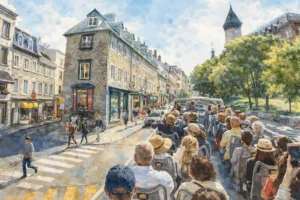
An Old Quebec historical walking tour can help you understand roughly four centuries of colonial, military, religious and civic history by connecting events to the streets and buildings where they unfolded. The referenced tour lasts about two hours and uses a costumed guide to turn the historic district into an open-air narrative rather than a list of dates.
The most useful part is seeing how different themes connect: the city’s colonial origins, the strategic importance of the St. Lawrence, fortifications, changing political control, religious institutions, trade and everyday urban life. Because the route takes place in real Old Quebec streets, the history feels tied to place rather than abstract.
For travelers who enjoy history, the value comes from understanding why Old Quebec looks and functions the way it does. The tour does not replace museums or deeper reading, but it gives you a strong framework that makes later visits to the Citadelle, churches and fortifications more meaningful.
Powered by GetYourGuide
What history will you learn on an Old Quebec walking tour?
You can expect a broad introduction to the development of Quebec City across several centuries. The tour connects political change, military strategy, religion, trade and everyday life rather than isolating each subject.
This makes the historical district easier to read. Streets, defensive walls and institutions become evidence of how the city developed instead of simply attractive old architecture.
Check the Old Quebec historical walking tour
Main history themes you can expect:
- Quebec City’s colonial origins and strategic position on the St. Lawrence.
- Fortifications, military defense and changing political control.
- Religious institutions and their role in the historic district.
- Trade, public squares and the development of civic life.
- How Upper and Lower Town evolved as connected but distinct parts of the city.
How does the tour explain the city’s colonial origins?
The tour uses Old Quebec’s surviving urban layout to explain how the settlement developed around the St. Lawrence River and why its location mattered strategically.
Rather than presenting colonial history as a single founding moment, a good guide can show how the city changed through different political periods and how those changes affected buildings, defenses and civic life.
The streets themselves become part of the explanation, which is why a walking format works well for this subject.
What role do fortifications and military history play in the route?
Military history is one of the clearest themes because Quebec City’s geography made defense central to its development. Walls, elevated ground and strategic viewpoints are easier to understand when a guide explains what they were designed to protect.
You do not need to be a military-history enthusiast to benefit. The defensive story also explains why Upper Town developed differently from the areas closer to the river.
If this subject becomes a major interest, La Citadelle is a natural follow-up attraction.
How are religion, trade and civic life connected to Old Quebec’s history?
Old Quebec’s churches, seminaries, public squares and commercial streets reflect more than architecture. They show how religion, administration and trade shaped everyday life.
A guide can connect institutions that may otherwise seem unrelated and explain why certain parts of the city became centers of worship, government or commerce.
This broader social context prevents the tour from becoming only a story of battles and political leaders.
Why does a costumed guide help the historical storytelling?
The costume creates an immediate visual link to the period being discussed. It can make the material feel less like a classroom lecture and more like a story unfolding within the historic setting.
The strongest tours use costume as a presentation tool rather than a substitute for substance. Historical interpretation should still be the reason to book.
For an overall value assessment, see whether a historical walking tour of Quebec City is worth it.
How does this history tour differ from a themed crime walk?
The general historical tour is broader. It aims to explain the development of Quebec City across many themes, while the Crimes of New France experience focuses specifically on law, punishment and darker social history.
A first-time visitor usually gets more orientation from the broad tour. A traveler who already knows the basics may find the themed crime walk more distinctive.
See what the Crimes of New France walking tour is like for that specialized format.
Who will get the most from a history-focused Old Quebec tour?
The best fit is anyone interested in Canadian history, architecture, fortifications or urban development. It is also useful for first-time visitors who want context early in their stay.
Expect hills, cobblestones and outdoor walking, so physical comfort matters as well as interest in the subject.
If you are comparing guided formats generally, see whether an Old Quebec walking tour is worth it. For official heritage information, consult the Quebec City tourism history and heritage guide.