
What Does a Guide Add at the Colosseum, Forum and Palatine Hill?
This experience is a guided visit to three major Ancient Rome sites: the Colosseum, Roman Forum and Palatine Hill. The guide’s main contribution is interpretation: instead of seeing separate ruins without much context, you get a connected explanation of how the amphitheatre, civic centre and imperial hill fitted together.
- Experience type: Guided Ancient Rome tour covering the Colosseum, Roman Forum and Palatine Hill.
- What a guide adds: Historical context, help identifying significant remains, a clearer connection between the three sites and the opportunity to ask questions during the visit.
- Listed price: From €43.63 at the September 3, 2026 snapshot; the amount can change by date, availability and selected options.
- Guest feedback: Average rating of 4.5/5 from 9,623 reviews at that snapshot.
- Popularity: Listed as a Rome bestseller at #29, with peer popularity of 8%.
- Check before booking: Confirm the current duration, route order, meeting point, inclusions, accessibility, age or mobility restrictions, cancellation terms, opening arrangements and available dates on the live listing.
Powered by GetYourGuide
What does a guide add to the Colosseum, Forum and Palatine Hill?
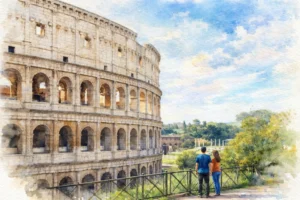
A guide adds a narrative that links the three archaeological areas into one experience. The Colosseum is easier to understand as an entertainment venue, the Roman Forum as the centre of public and political life, and Palatine Hill as a place associated with elite and imperial power.
That context can make a substantial difference because the sites are largely ruins rather than complete buildings. A guide can point out which surviving structures mattered, explain how spaces were used and answer questions while the evidence is directly in front of you. The value is therefore mainly interpretive and practical, not an automatic promise of special access.
A guided ticket does not necessarily mean skip-the-line entry, an exclusive route or entry to restricted areas. Treat those as separate features and confirm them in the current booking description rather than assuming they are included.
Check the guided Colosseum and Ancient Rome tour
What does this named tour format include?
The named experience covers the Colosseum, Roman Forum and Palatine Hill with a guide. Those three places are the defining scope of the activity, so it is broader than a Colosseum-only ticket and more structured than entering the archaeological area independently.
The supplied listing information does not establish the exact duration, sequence of the stops, group size, language, meeting or pickup arrangements, or whether any particular access option is included. These details can materially change the experience. For example, a tour starting outside the Colosseum may handle the Forum and Palatine Hill in a different order from one beginning at the archaeological area.
Also check whether the listed price includes admission to all three sites or describes a guided service alongside separately controlled entry. The wording on the live booking page and the checkout selection should be treated as decisive.
Review current inclusions and tour options
Guided tour or self-guided visit: which suits you?
Choose the guided format if you want a coherent explanation, help orienting yourself among ruins and the ability to ask questions. A self-guided visit can be better for travelers who prefer a slower or more selective route, already know the history or want to spend extra time photographing specific areas.
| Priority | Guided visit | Self-guided visit |
|---|---|---|
| Understanding the ruins | Context is explained as you move through the sites. | You must use signage, an audio guide or your own research. |
| Pacing | The group follows the guide’s schedule and route. | You usually have more control over pauses and detours, subject to site rules. |
| Questions | You can ask about buildings, people and historical interpretations. | Questions require independent research or an audio resource. |
| Cost planning | The listed price is from €43.63 in the stated snapshot, with live prices subject to change. | A separate admission ticket and optional guide or audio product may be needed. |
For a closer comparison, see how Colosseum entry with an audio guide works. Travelers mainly interested in the arena level should also compare it with a Colosseum arena floor tour versus a standard visit.
Who is most likely to benefit from booking a guide?
This tour is a sensible choice for first-time visitors, travelers with limited time and anyone who finds archaeological sites difficult to decode alone. It can also help families and mixed-interest groups because a guide can provide a shared storyline rather than leaving each person to interpret scattered remains independently.
Experienced Roman-history readers may gain less from basic explanation, particularly if they prefer to linger at one location. The same applies to travelers who want a highly flexible visit or who are uncomfortable keeping to a group pace. In that case, an independent ticket, audio guide or private arrangement may be a better fit if available for the chosen date.
Read the current listing carefully if you need a particular language, a private guide, a small group, wheelchair access or a route suitable for limited mobility. None of those features should be inferred solely from the word “guided.”
What should you check before booking?
The main pre-booking decision is whether the value of live explanation outweighs the reduced flexibility of a scheduled group visit. Before paying, compare the following points against your priorities:
- Access: Confirm that admission to the Colosseum, Roman Forum and Palatine Hill is included as described for the selected option.
- Timing: Check the exact start time, duration and arrival requirement. Large sites are less forgiving of late arrival than a casual city walk.
- Route: Confirm the meeting point and whether the tour begins at the Colosseum, Forum, Palatine Hill or another nearby location.
- Group format: Look for the group size, language and whether the guide is live rather than an audio or app-based product.
- Physical demands: Verify stairs, uneven archaeological surfaces, walking distance and accessibility information if these affect your plans.
- Change and cancellation rules: Check the terms attached to the exact date and option, since these may differ between selections.
The listing’s snapshot price begins at €43.63, but price and availability are date-sensitive. A lower headline price may apply only to particular times or options, so compare the full checkout total and inclusions.
See dates, prices and available booking options
How should you prepare for the three-site visit?
Wear supportive shoes and allow time to reach the confirmed meeting point. The Colosseum, Forum and Palatine Hill form a substantial archaeological visit with exposed areas, uneven ground and limited shade in places, so water, sun protection and weather-appropriate clothing are practical choices.
Bring the booking confirmation and follow the stated arrival instructions. Avoid planning a tightly timed attraction immediately afterward until you know the tour’s duration and route. Transport planning is easiest when you treat the Colosseum area as the fixed destination and check the final meeting address rather than relying on a general “Colosseum” map pin.
For official visitor information, access rules and current site notices, consult the official Colosseum Archaeological Park website.
What will the guide help you notice at each site?
The exact commentary depends on the guide and route, but the three stops offer different kinds of historical evidence:
- Colosseum: The guide can explain the building’s role as an amphitheatre, how spectators related to the arena and what the surviving structure can—and cannot—tell you.
- Roman Forum: Commentary can connect temples, civic buildings, roads and public spaces to the political and social life of Rome instead of treating each ruin as an isolated object.
- Palatine Hill: The guide can place the hill’s remains within the story of elite residences, imperial authority and the wider landscape of ancient Rome.
The benefit is not simply hearing more facts. It is learning how to read the relationship between location, architecture and power, which is often difficult to reconstruct from ruins alone.
How should you interpret the rating and price?
The experience is listed with an average rating of 4.5/5 from 9,623 reviews, plus a Rome bestseller rank of #29 and peer popularity of 8% in the September 3, 2026 snapshot. Those figures indicate substantial traveler interest, but they do not guarantee that a particular guide, time slot or group format will match your expectations.
Use reviews to look for specific evidence: whether explanations were clear, the group size felt manageable, the meeting instructions were easy to follow and the pace suited the archaeological area. Give particular weight to recent comments about logistics, while remembering that route and operating details can change.
At a starting price of €43.63 in the stated snapshot, the tour may offer good value for visitors who would otherwise spend time researching the sites or navigating them without context. Travelers who already have strong historical knowledge may reasonably prefer to pay only for admission and choose their own interpretation method.
Compare the tour’s latest traveler details
How does this fit into a Rome itinerary?
Plan the three-site visit as a major history-focused block rather than a short photo stop. It pairs naturally with nearby Ancient Rome viewpoints and museums, but adding another timed attraction immediately afterward can create unnecessary pressure until the tour length is confirmed.
If you are deciding between several Ancient Rome formats, compare this three-site guided experience with a Colosseum-only entry, an audio-guided visit and an arena-floor option. The most suitable choice depends on how much interpretation you want, how independently you like to explore and how important route flexibility is.
For broader planning across neighborhoods, transport and other attractions, use this practical guide to visiting Rome.