Sydney Harbour Bridge Daytime Summit Climb FAQ
This guide explains what the daytime summit climb involves, how tickets work, what to wear, and what to check before booking. Conditions and inclusions can change, so the information shown during the booking process should take priority.
1. What is included in a Sydney Harbour Bridge Daytime Summit Climb ticket?
A standard daytime summit ticket is for a guided walk along the upper arch of the Sydney Harbour Bridge. Before going outside, your climb leader normally provides a safety briefing, checks your harness, and explains how to use the fixed safety line. The group then follows the bridge structure at a steady pace, stopping at designated points for views and commentary.
Tickets commonly include the guided climb, safety equipment, a climb suit or suitable outer layer where required, and a group photograph or digital photo entitlement. Inclusions can differ by product, so do not assume that food, hotel transfers, private guiding, or a large collection of individual photographs is included. Read the ticket description carefully, particularly if several climb formats appear in the same search.
The summit route is not simply an observation-deck visit. Participants climb outdoors on bridge walkways and stairs, so the experience depends on your ability to walk continuously, climb steps, follow instructions, and remain comfortable at height. The guide sets the pace, and the group usually stays together.
View daytime summit climb ticket options
2. How much does the daytime summit climb cost?
There is no single permanent price for every daytime summit climb. The amount can change according to the date, start time, demand, booking platform, promotions, group size, and whether the product is a standard, express, private, or otherwise upgraded climb. Expect this to be a premium attraction rather than a low-cost sightseeing activity, with adult tickets commonly priced in the several-hundred-dollar range.
The safest way to compare the cost is to select your preferred date and number of participants, then check the total before entering payment details. Look for taxes, booking fees, photo charges, and any optional extras. A cheaper headline price may have different cancellation terms or fewer inclusions than another listing.
Children and young people may have different prices, but age rules still apply. If you are booking for a family, enter every participant’s age accurately. The operator may refuse participation if a child does not meet the minimum age or height requirement, even if a ticket was purchased incorrectly.
For a fair comparison, calculate the cost against the time commitment: the climb usually takes around 3.5 hours from check-in to completion. That helps you plan other Sydney activities without treating the ticket as a short photo stop.
Check current prices and availability
3. How long does the climb take, and what happens during the session?
Allow approximately 3.5 hours for the complete experience. This normally includes arrival and registration, a briefing, changing or preparing for the climb, equipment fitting, the guided route, photography stops, and returning equipment after the walk. The time on the bridge is only one part of the booking, so avoid scheduling a ferry, restaurant reservation, theatre show, or airport transfer too closely afterwards.
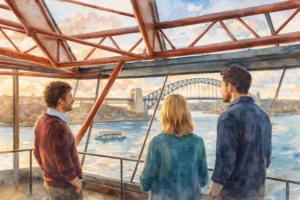
The session usually begins indoors with forms and a safety explanation. The climb leader checks that each person understands the instructions before the group goes onto the bridge. During the route, the guide may stop to point out the Opera House, harbour, city skyline, North Sydney, and other landmarks. The path includes stairs and uneven changes in level, and the group may pause while another group passes.
Weather, group pace, operational requirements, and temporary bridge conditions can affect the exact duration. People who are comfortable walking but need regular rests should mention this before departure. A slower pace may be possible, but the activity remains a physically active guided climb.
View available daytime climb dates
4. What are the age, height, and fitness requirements?
Most summit climb products require participants to be at least 8 years old and at least 1.2 metres tall. Children and teenagers normally need to be accompanied by an adult, and the adult-to-child ratio can depend on the booking rules. Confirm the exact policy for your selected product because requirements can change between climb types.
You do not need to be an elite athlete, but you should be able to walk for several hours, climb repeated stairs, keep your balance on outdoor walkways, and follow the guide’s instructions. The bridge is high above the harbour, and some sections can feel exposed even though participants are attached to a safety line. People with a strong fear of heights should consider whether this setting is suitable before booking.
Tell the operator in advance about relevant medical conditions, recent injuries, pregnancy, mobility limitations, vertigo, or medication that could affect balance or exertion. A health declaration is generally required. The operator, not a booking website, makes the final decision about participation when safety is uncertain.
Do not book for a child based only on the adult ticket description. Check the minimum height with shoes, supervision rules, and whether every member of the group can manage the stairs without assistance.
5. What should you wear and bring?
Choose comfortable active clothing that allows free movement. Long trousers or fitted athletic clothing are practical because the harness sits around the hips and legs. Wear enclosed, secure, flat shoes with good grip; sandals, loose shoes, high heels, and footwear that can slip off are poor choices.
Conditions can change quickly on the exposed bridge. Bring a light layer for wind or cooler weather, but avoid bulky clothing that interferes with the harness. In warm weather, apply sunscreen before check-in and consider a hat only if the operator permits it under the required equipment. The climb leader may ask participants to remove anything that could fall or catch.
Most loose personal belongings cannot be carried on the route. Storage is usually provided for items such as phones, cameras, large bags, jewellery, and keys. Bring identification if the booking instructions request it, but do not arrive expecting to use your phone for photographs during the climb. The guide will explain what can safely be taken outside.
- Wear enclosed, secure footwear.
- Choose fitted layers rather than loose coats or scarves.
- Arrive with enough time for registration and equipment fitting.
- Leave large bags and valuable jewellery at your accommodation where possible.
- Bring water if permitted, but follow the operator’s instructions about items on the bridge.
6. What are the daytime views like, and is daylight the best choice?
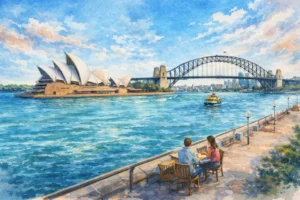
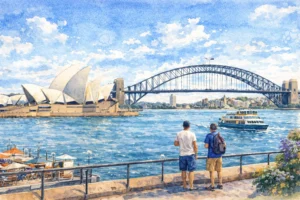
Daylight is useful for visitors who want clear views of Sydney’s harbour geography, bridge structure, ferry routes, bays, and city buildings. The Opera House and skyline are generally easy to identify, and the changing position of the sun can create different views throughout the day. A morning climb may feel cooler and less intense in summer, while a later daytime session can offer brighter city light.
The best time depends on what you value. Daytime is practical for first-time visitors who want to see the bridge and harbour in detail. Twilight adds changing colour and city lights, while a night climb focuses more on illuminated landmarks and atmosphere. Those options are separate products with different departure times and pricing.
Visibility is not guaranteed. Rain, cloud, haze, glare, wind, and smoke from distant fires can affect the view. The climb normally operates in varied weather unless conditions create a safety issue, so book with realistic expectations rather than assuming every session will have a perfectly clear skyline.
For a direct comparison of the three formats, see this guide to Sydney BridgeClimb daytime, twilight, or night options.
7. Where do you check in, and how early should you arrive?
Use the meeting-point address and check-in instructions shown on your voucher, not a generic Sydney Harbour Bridge address. The bridge has several nearby roads, walkways, transport stops, and venues, and arriving at the wrong side can create a stressful walk. Plan the route in advance and allow extra time for public transport delays, traffic, security procedures, and finding the correct entrance.
Arrive by the time stated in the booking instructions, often well before the climb begins. The operator needs time to register participants, complete declarations, provide a safety briefing, and fit equipment. Late arrival may mean missing the group and losing the ticket, particularly when the next climb is full.
Public transport is usually the easiest way to reach the central Sydney check-in area. If travelling by car, allow time to find and pay for parking; parking availability near the bridge can be limited and expensive. Do not build a tight itinerary around the session. A sensible plan leaves at least an hour of flexibility after the advertised end time.
8. Can the climb be cancelled, changed, or affected by weather?
Cancellation and amendment rights depend on the exact booking terms. Some tickets allow free cancellation or changes until a stated deadline, while others become non-refundable shortly before departure. Read the policy before payment and save the confirmation email. Third-party booking platforms may display a separate cancellation summary, but the product-specific terms control the reservation.
The operator may alter, delay, or cancel a climb for safety reasons such as strong wind, lightning, extreme heat, or other operational conditions. If the operator cancels, the available remedy may include rescheduling or a refund under the applicable terms. A poor view caused by ordinary cloud or haze does not necessarily qualify for compensation.
Do not cancel on your own simply because the forecast looks unsettled until you understand the policy. Contact the booking provider or operator using the details on your confirmation. If you have a limited Sydney itinerary, choose a date early enough to leave room for a rescheduled session.
Weather can also affect what you wear and how comfortable the route feels. Wind is more noticeable on exposed parts of the bridge, so a light layer and secure clothing are useful even on a warm day.
9. Is the daytime summit climb suitable for families, older visitors, or people with accessibility concerns?
Families often choose the daytime session because the harbour and landmarks are easier for children to see in daylight. However, the experience is still a structured climb, not a casual lift ride. Adults should consider a child’s height, confidence at height, ability to follow directions, and stamina for several hours. Keep the group together and explain beforehand that phones and loose belongings may need to be stored.
Older visitors can participate if they meet the operator’s health, mobility, and fitness requirements, but age alone does not determine suitability. The route involves stairs, standing, walking, and balance. Anyone concerned about knees, hips, breathing, blood pressure, vertigo, or recovery from an injury should ask the operator for a current assessment before purchasing.
Accessibility may be limited because the route uses bridge stairs, narrow sections, harness equipment, and outdoor infrastructure. Do not assume that wheelchair access, powered mobility devices, or assistance on the full summit route is available. Contact the official operator before booking and describe the specific support required. The operator can confirm whether the route and equipment are appropriate for the individual participant.
Participants who cannot meet the summit route requirements may prefer viewing the bridge from the harbour foreshore, a ferry, or an accessible lookout, but those alternatives are not substitutes for the booked climb and should be planned separately.
10. What do visitors say about the daytime summit climb, and where can I verify the details?
Experiences vary, but three recurring visitor impressions are useful when deciding whether the ticket suits your trip:
Visitor impression 1: clear views and knowledgeable guiding
One daytime participant described the guide as calm and informative, particularly when explaining how the bridge was built and identifying harbour landmarks. They enjoyed having time to stop for photographs and felt that daylight made the route easier to follow. Their main advice was to allow more time than the advertised climb start because check-in and equipment preparation are part of the experience.
Visitor impression 2: memorable, but physically more demanding than expected
Another climber said the views were excellent but noted that the stairs and several hours on the route required more stamina than they expected. They recommended wearing proper shoes, eating beforehand, and avoiding a tightly scheduled activity immediately afterwards. This is a helpful reminder that the summit climb is an active tour, even when the pace is controlled.
Visitor impression 3: weather and exposure affect the experience
A further visitor enjoyed the open-air setting but found the wind noticeable on exposed sections. They were pleased to have booked a daytime slot with good visibility, while also acknowledging that conditions cannot be guaranteed. Their practical lesson was to check the forecast, bring a suitable layer, and understand the cancellation policy instead of assuming a poor-weather refund.
These impressions should be treated as individual experiences rather than promises. Guide style, crowd levels, weather, visibility, and group pace can differ on every departure. For the most authoritative information about current routes, safety requirements, operating conditions, and official inclusions, consult the official BridgeClimb Sydney website.
Before confirming your booking, check the live ticket page for the exact session time, total price, age and height rules, meeting instructions, cancellation conditions, and accessibility information. You can also plan the rest of your visit with the broader Sydney travel planning guide.
Check entry times before booking
Quick booking checklist
- Confirm that every participant meets the minimum age and height requirements.
- Check the live total price, currency, inclusions, and cancellation deadline.
- Choose a session that leaves time for transport and possible delays.
- Read the health, fitness, accessibility, and weather information.
- Save the voucher and follow its check-in instructions.