
Dachau Full-Day Tour from Munich: What You See Beyond the Half-Day Tour
A Dachau full-day tour from Munich gives you more time at the Dachau Concentration Camp Memorial Site than a half-day itinerary, usually including round-trip transport from Munich, a guided visit, and time to see the main buildings, exhibitions, grounds, and memorial areas without rushing.
Plan for approximately 6–8 hours including travel, although the exact schedule depends on the operator. The memorial site is generally open daily from 9:00 a.m. to 5:00 p.m. and is closed on 24 December. Admission to the memorial site is free, but guided tours, transport, and booking fees may cost extra. Check the specific tour listing for the meeting point, accessibility details, language, inclusions, and cancellation terms.
- Best for: visitors who want a slower, more complete visit and time for the exhibitions.
- What you may see: the former prisoner compound, reconstructed barracks, roll-call area, religious memorials, crematorium area, museum exhibitions, and memorial grounds.
- What to bring: comfortable shoes, weather-appropriate clothing, water, and respectful attention; this is a place of remembrance rather than a conventional sightseeing attraction.
Powered by GetYourGuide
A longer Dachau itinerary is useful because the memorial site contains several distinct areas, and the journey from Munich takes time in both directions. The following FAQ guide explains what changes when you choose a full-day tour, what to expect on site, and how to prepare thoughtfully.
1. What is included in a Dachau full-day tour from Munich?
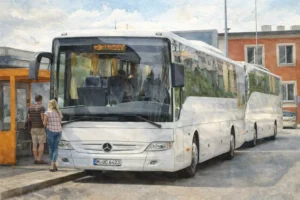
Most full-day tours include transport from a central Munich meeting point or a designated pickup location, a guide or tour leader, and several hours at the memorial site. Some packages use public transport with a guide, while others use a private vehicle or coach. The precise inclusions vary, so read the booking page rather than assuming that hotel pickup, food, entrance fees, or a professional memorial-site guide are included.
A well-planned full-day visit normally leaves enough time for an orientation, the main memorial grounds, the museum exhibition, the reconstructed barracks, the religious memorials, and the crematorium area. Some tours also allow limited independent time. Ask whether the guide remains with the group throughout the visit and whether the itinerary includes a scheduled meal break.
If you are comparing formats, our guide to the Dachau Memorial Site tour from Munich provides a useful alternative overview.
Check current full-day tour availability
2. How is a full-day tour different from a half-day tour?
The main difference is the amount of time available at the memorial, not necessarily the number of headline sights. A half-day tour can be suitable for travelers with a tight schedule, but the visit may feel more structured and may leave less time to read the exhibitions or pause at individual memorials. A full-day tour usually gives you a wider margin for transport delays, a longer guided explanation, and independent time to revisit sections that require more attention.
| Feature | Half-day tour | Full-day tour |
|---|---|---|
| Overall duration | Often around 5–6 hours including transport | Often around 6–8 hours, depending on the operator |
| Time at the memorial | More limited and tightly scheduled | Usually longer and less rushed |
| Best suited to | Short stays or visitors with evening plans | Visitors wanting more context and time for exhibitions |
| Independent time | May be brief or unavailable | More likely, but never guaranteed |
| Planning priority | Efficient overview | Deeper, more reflective visit |
For a closer comparison of schedules and practical planning, see our guide to a Dachau half-day tour from Munich. The better choice depends on your available time, how much reading you want to do, and how comfortable you are with a demanding subject in a compact itinerary.
3. What do you see at the Dachau Memorial Site?
The visit commonly begins at the former prisoner compound, reached through the memorial entrance. You may see the roll-call area, the reconstructed barracks, the former maintenance building containing the main exhibition, and the path leading toward the crematorium area. The site also includes several religious memorials and open grounds that help visitors understand the scale and layout of the former camp.
The museum exhibition is particularly important for visitors who want historical context. It explains the development of Dachau, the prisoner groups held there, daily conditions, forced labor, persecution, liberation, and the postwar history of the site. Reading every section takes time, which is one reason a full-day visit can be more satisfying than a rushed stop.
At the crematorium area, visitors should follow the site’s rules and the guide’s instructions. Photography, conversation, and movement should be handled respectfully. The memorial is an educational and commemorative institution, and some displays contain difficult material. The official Dachau Memorial Site opening-hours information is the best place to confirm current visiting times before you travel.
View available dates and tour details
4. How long does the journey from Munich to Dachau take?
The journey commonly takes about 30–60 minutes each way, but the real duration depends on the meeting point, traffic, public transport connections, and whether the tour uses a coach, minibus, or train. A tour using public transport may involve walking between the station, bus stop, and memorial entrance. A vehicle-based tour can simplify logistics, but traffic may affect the return time.
Allow extra time beyond the advertised schedule if you have a train, flight, restaurant reservation, or another tour later that day. The memorial is not in central Munich, and a full-day tour can end later than expected if the group is delayed. Confirm the meeting point carefully and arrive early, especially when the operator states that the tour cannot wait for late arrivals.
5. What is the right amount of time to spend at Dachau?
There is no single correct duration, but many visitors benefit from at least three hours on site. That allows time for an introduction, the museum, the former prisoner area, the reconstructed barracks, and the memorial grounds. A full-day tour may provide four or more hours at the site, depending on transport and the guide’s schedule.
More time does not mean that every visitor must examine every display. The subject matter can be emotionally exhausting, and taking a quiet break is reasonable. Wear comfortable shoes because the grounds are extensive and include outdoor paths. If mobility is a concern, contact the tour operator and the memorial site in advance to clarify walking distances, surfaces, seating, and accessible facilities.
6. Is a guided tour worthwhile at the Dachau Memorial?
A knowledgeable guide can explain the site’s chronology, terminology, and layout while helping visitors distinguish documented history from assumptions or simplified stories. This is especially useful for first-time visitors who want an organized explanation of how Dachau developed and how the memorial site relates to the wider Nazi camp system.
A guide cannot replace personal reading, and the quality of interpretation varies. Before booking, check whether the tour is led by a professional guide, a licensed city guide, or a tour leader who accompanies you to an official guided service. Look for clear information about the language, group size, start time, and what happens if you want more independent time. For broader historical context before or after the memorial visit, a Munich Third Reich walking tour covers related locations in the city.
See the tour meeting point and inclusions
7. What should you wear and bring?
Choose practical clothing rather than formal sightseeing clothes. Much of the visit takes place outdoors, and weather can change quickly. Comfortable walking shoes are important because the memorial grounds are broad and the itinerary may include standing during explanations. In warm weather, bring water, sun protection, and a light layer; in colder or wet conditions, bring a waterproof coat and suitable footwear.
- Bring a valid booking confirmation and the exact meeting-point details.
- Carry water and any medication you may need during a long day.
- Keep your phone on silent and follow photography instructions.
- Do not plan a picnic or casual leisure stop inside the memorial grounds.
- Bring identification if the operator’s booking terms request it.
Large bags may be inconvenient, and restrictions can apply in some areas. Check the operator’s luggage guidance before departure rather than arriving with unnecessary items.
8. Is a Dachau full-day tour suitable for children?
The site is open to visitors of different ages, but parents should decide based on the child’s maturity, ability to understand historical violence, and comfort with difficult images and testimony. The exhibition includes serious subject matter, and the visit may be tiring because it combines travel, walking, and sustained concentration.
Older teenagers often benefit from a guided explanation and preparation beforehand. Explain that the purpose is to learn about real people and historical persecution, not to treat the site as an entertainment attraction. Families should also ask about the minimum age, group pace, restroom access, and whether the operator permits a child to leave a section with an accompanying adult if needed.
9. What do visitors say about the full-day experience?
Visitor feedback commonly highlights the value of having enough time to absorb the museum and grounds instead of moving quickly between stops. The following representative comments reflect the practical themes travelers often mention in reviews; individual experiences depend on the guide, group size, weather, and transport conditions.
“The longer schedule gave us time to read the exhibition and still walk through the memorial grounds without feeling hurried. The guide’s historical explanation made the layout easier to understand.”
“The subject is difficult, but the guide handled it seriously and respectfully. Comfortable shoes were essential, and I was glad we had time to pause rather than rush through the displays.”
“The most useful part was having transport and timing organized. I would recommend checking the meeting point carefully and leaving extra time in the evening in case the return journey is delayed.”
These comments should not be treated as a guarantee. Read recent reviews on the booking page for the exact operator and check whether feedback refers to the current guide, vehicle, language, and itinerary.
10. How should you book and prepare for the visit?
Start by choosing the amount of time you genuinely want at the memorial rather than selecting a tour only because it has the lowest price. Compare the meeting point, transport type, site time, guide language, group size, accessibility information, cancellation policy, and what is included. A longer tour may cost more because of transport and guiding, while the memorial site’s admission itself is generally free.
- Confirm the date and opening hours before booking.
- Check whether the tour starts from central Munich or requires you to reach a suburban pickup point.
- Read the exact duration and distinguish total tour length from time at the memorial.
- Verify whether a memorial-site guide, transport ticket, or entrance arrangement is included.
- Plan a light schedule afterward because the visit can be mentally demanding.
- Keep the confirmation accessible and arrive at least 10–15 minutes early.
Opening schedules and visitor arrangements can change, so confirm details close to your travel date using the official Dachau Memorial Site visitor information. For other Munich planning ideas, see the wider Munich travel guide.
Check prices and availability for your date
A full-day Dachau tour is usually the better option for visitors who want historical context, time for the museum, and a less compressed experience. A half-day tour can still work when your Munich schedule is limited, but compare the actual time at the memorial and the transport arrangements before deciding.